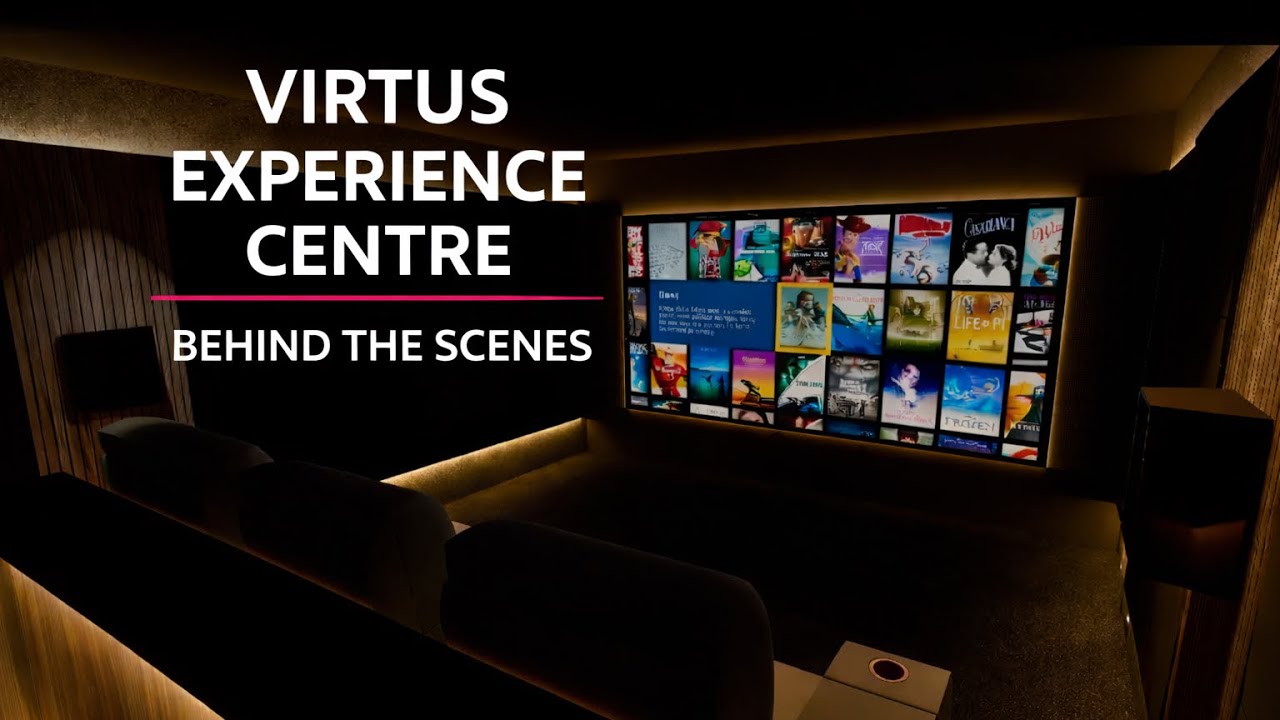
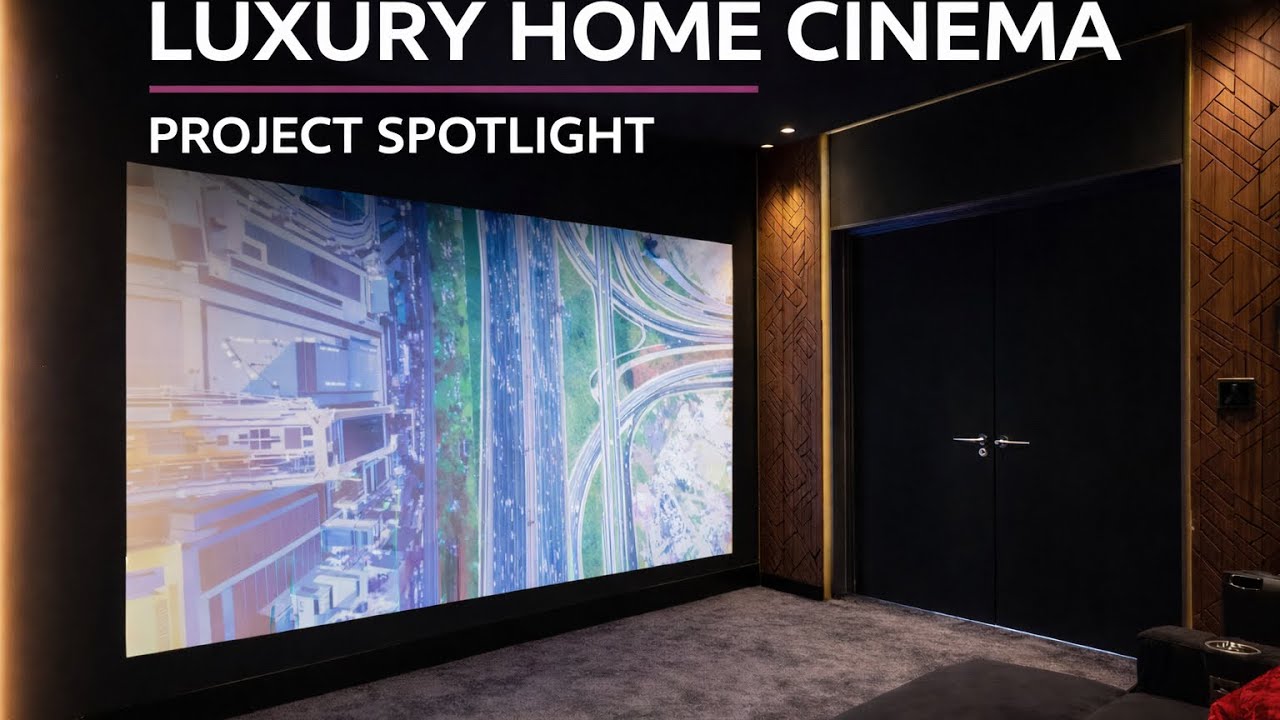
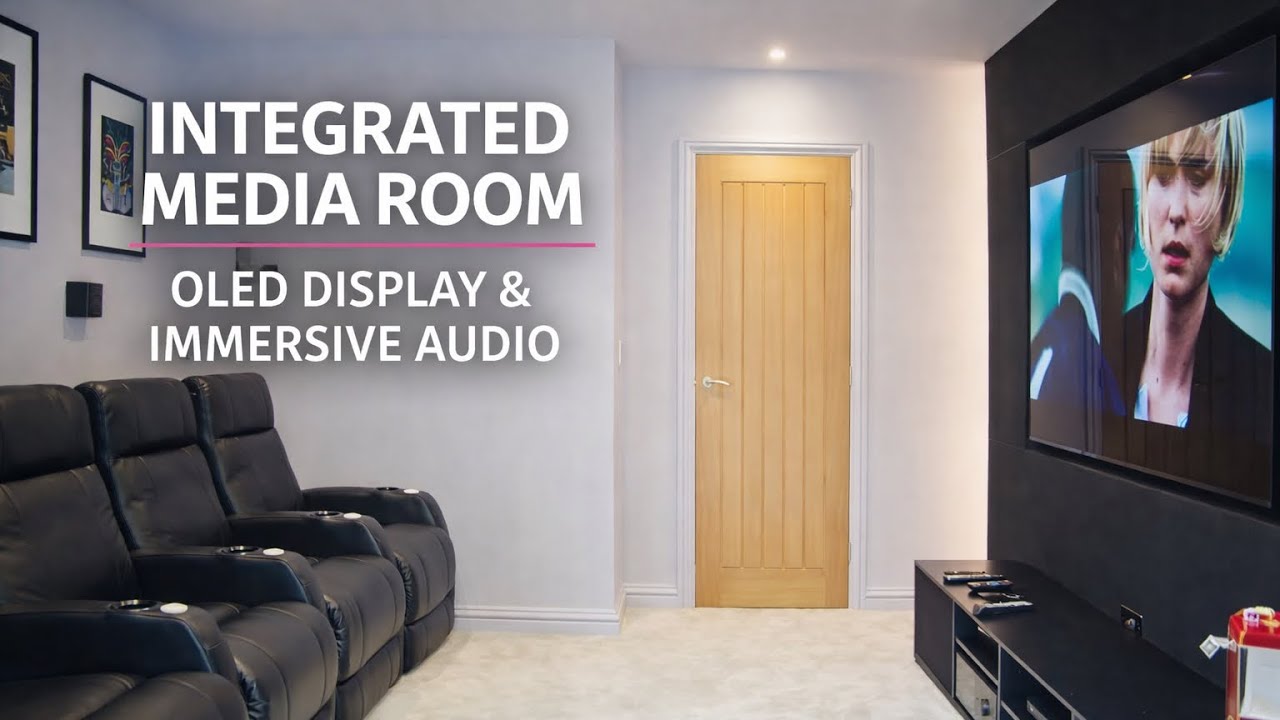
Most home cinema demo suites exist to sell equipment. The £400K Pulse Cinemas reference suite at their Stansted showroom was built for something different: to make you understand, at a visceral level, what a serious home cinema actually feels like. This is what that room taught us.
What Is a Reference Demo Suite — and Why Does It Cost £400K?
A reference demo suite is not a showroom. It's not a trade stand. It's a fully constructed, meticulously calibrated private cinema that exists to demonstrate the absolute ceiling of what home cinema technology can deliver.
At this price point, the money doesn't just buy better equipment. It buys:
- ▪A purpose-built acoustic environment, not a repurposed room
- ▪Calibration and commissioning by specialist engineers
- ▪Seating, joinery, and finishes to luxury interior design standards
- ▪The integration of every element — lighting, acoustics, scent, temperature — into a single coherent experience
Pulse Cinemas is one of the UK's leading home cinema distributors, supplying equipment to professional integrators nationwide. Their Stansted showroom houses multiple demo rooms, but the reference suite represents their flagship: the benchmark against which everything else is measured.
The Design Philosophy Behind the Room
The traditional home cinema had a problem: it was impressive but uninviting. Dark. Sterile. A room you'd walk into for a specific film and leave immediately after. Nobody wanted to spend time in it.
"Those black rooms — they're still quite sterile. So now we've tried to take it a bit more into a relaxing area, a bit more of a chill. It's all about the experience that you get when you walk in, the smells, everything that comes with it, the lighting."
This shift in thinking — from technical showcase to experiential environment — represents the biggest change in high-end home cinema over the past decade. The equipment is necessary but not sufficient. The room itself must be somewhere you genuinely want to be.
Pulse Cinemas designed the reference suite around total sensory experience. Every element contributes: the quality of the seating, the warmth of the lighting, even the scent of the room on entry. It's the same logic that luxury hotels apply — the details that you notice subconsciously are the ones that determine how the space makes you feel.
The Technology Specification
A £400K demo suite draws from the top tier of available equipment across every category. While specific configuration details vary as the room evolves, reference suites at this level typically include:
| System Category | Reference Specification |
|---|---|
| Projection | 4K RGB laser, 10,000+ lumens (Christie, Barco, or similar) |
| Screen | Acoustically transparent, motorised masking, 130"–160" diagonal |
| Audio processing | Dolby Atmos / Auro-3D processor (StormAudio or equivalent) |
| Speaker system | 11+ channel configuration, specialist brand throughout |
| Subwoofers | Multiple units for seat-to-seat bass consistency |
| Seating | Motorised luxury cinema chairs, customised to specification |
| Lighting | Tunable LED, scene-programmable, dimmable to absolute black |
| Control | Integrated automation (Control4, Crestron, or equivalent) |
The total represents components, installation, calibration, joinery, acoustic treatment, and commissioning — not a list price from a product catalogue.
The Screen Artwork Feature — Deco Mask
One of the standout innovations demonstrated in this room is the Deco Mask — a custom artwork panel that conceals the projection screen when not in use.
"To stare at a blank white rectangle is not the nicest. So by having a drop-down image, basically it makes the front of the room look like a huge picture — and it just finishes everything off."
The concept solves a genuine aesthetic problem: a cinema screen in a luxury space looks wrong when the system is off. The Deco Mask replaces the white screen face with a full-colour printed image — artwork, a landscape, a mural — that integrates the room into the home's interior design language rather than announcing itself as a cinema.
The key technical requirement: the artwork panel must be acoustically transparent, so the speakers positioned behind the screen continue to perform correctly regardless of whether the art panel is deployed. Audio travels through the printed surface without meaningful degradation.
How It Works in Practice
- 1.Screen is installed behind the artwork panel as normal
- 2.Custom image is printed on the acoustically transparent front surface
- 3.When the system is off, the room shows artwork
- 4.On activation, the projection system fires through the artwork — or the panel retracts to reveal the screen
- 5.The transition can be automated as part of the room's scene programming
For clients who want home cinema performance but resist the visual language of a cinema room, this is a genuinely elegant solution.
What the Experience Feels Like
Visiting a reference demo suite like this changes your frame of reference permanently. Most people who experience it describe the same three reactions:
1. The visual impact is immediate. A properly calibrated 4K laser projector at this screen size produces an image that is objectively brighter, more detailed, and more dynamic than anything seen before. The first three minutes of any film on this system leave a lasting impression.
2. The audio is felt, not just heard. A correctly specified multi-subwoofer system with point-source or line-source speakers doesn't just play sound — it reproduces acoustic pressure. The experience during action sequences or large orchestral passages is physically different from even very good home audio.
3. The room itself matters more than expected. The acoustic design, the seating comfort, the lighting quality — these elements are experienced before the first frame plays. Clients who visit reference suites consistently report that the room surprised them as much as the technology inside it.
What This Means for Your Own Project
You don't need to spend £400K to have a great home cinema. But visiting a reference suite like this calibrates your expectations in a way that no brochure or YouTube video can replicate.
The lessons that translate to any budget:
- ▪Acoustic treatment is not optional. Even at modest scale, an untreated room undermines expensive equipment.
- ▪The room experience starts before the screen is on. Lighting, scent, seating — these are not luxuries, they're part of the product.
- ▪Integration matters. A reference system means every component chosen and calibrated to work together, not assembled from parts.
- ▪Calibration is where specification becomes performance. The gap between an installed system and a calibrated system can be the difference between good and extraordinary.
Frequently Asked Questions
How much does a high-end home cinema demo suite cost to build?
A reference-level demo suite like the one at Pulse Cinemas represents an investment of around £300,000–£500,000 fully fitted and calibrated. This covers specialist AV equipment, acoustic construction, premium seating, lighting design, joinery, and professional commissioning. The figure reflects the combined cost of every element working as a system — not individual component prices.
Can I visit a reference home cinema demo suite in the UK?
Yes. Several UK distributors and integrators maintain demonstration facilities, including Pulse Cinemas (Stansted), Habitech, and Zebra Home Cinema's own showroom. Visiting is strongly recommended before specifying any serious project — it's the only reliable way to understand what different price points and configurations actually deliver.
What makes an acoustically transparent projection screen better?
An acoustically transparent screen allows the front left, centre, and right speakers to sit directly behind the screen at the correct positional height — just as in commercial cinemas. This means dialogue and on-screen audio appear to come from where you're looking, rather than from speakers positioned off to the sides. For rooms with a 5.1+ speaker configuration, the performance difference is significant.
What is a Deco Mask on a projection screen?
A Deco Mask is a custom-printed artwork panel that sits in front of the projection screen when the system is not in use. It conceals the white screen face and replaces it with an image of your choosing — artwork, photography, or a pattern — so the room looks like a designed interior space rather than a cinema when not in use. The material is acoustically transparent, allowing speakers behind it to perform without restriction.
Is a £400K home cinema worth the investment?
For clients at the appropriate wealth level, yes — unambiguously. The experience delivered by a correctly designed and specified reference system is categorically different from any commercial cinema, not just incrementally better. Beyond the personal value, a well-executed home cinema installation adds meaningfully to high-end property values and distinguishes a residence in ways that other luxury additions rarely do.