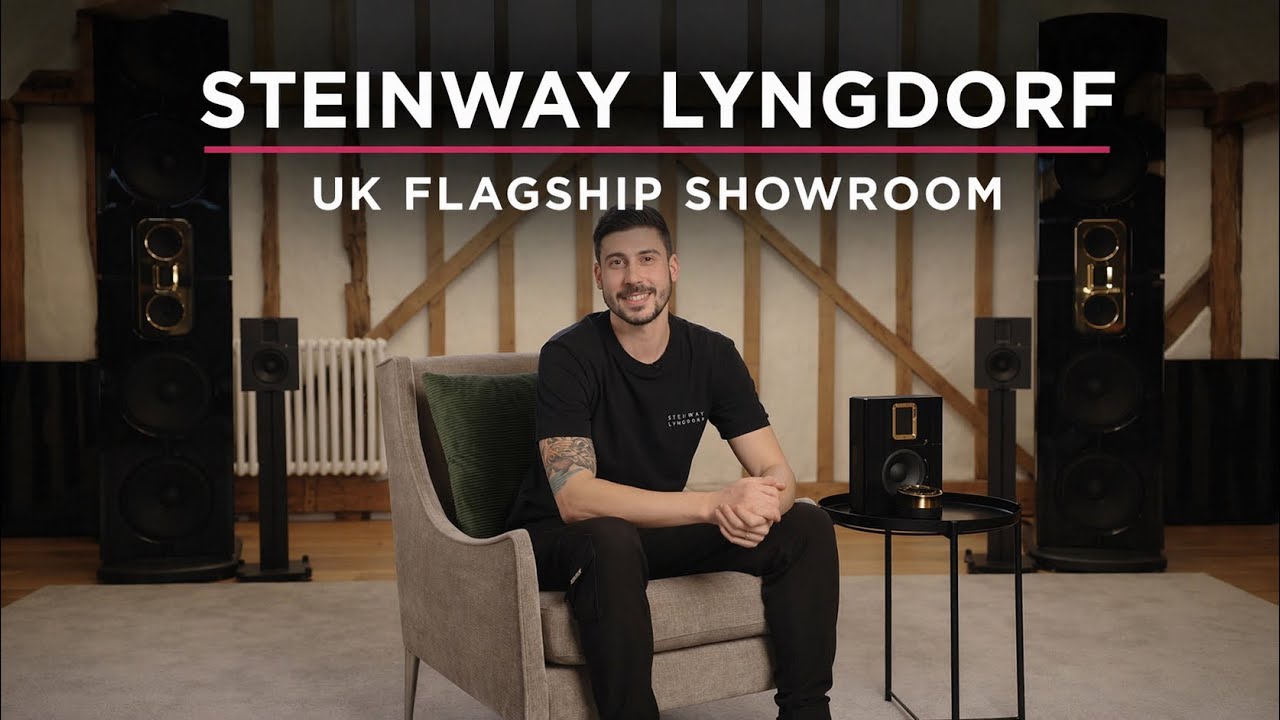
Aicha Djidjelli is the drummer in the Hans Zimmer Live ensemble — one of the world's most technically and musically demanding touring band positions. She's also on the Dune: Part Two soundtrack, having been briefed by Hans Zimmer to produce something that sounded "ancient and futuristic at the same time." When Atif invited her to the Steinway & Sons showroom in Colchester to hear some systems, she chose to stay and listen for hours. Her description of the Model D experience — "getting into water and feeling smothered in audio glory" — is one of the best descriptions of a reference audio system anyone has offered.
The Hans Zimmer Live Ensemble: Serious Music, No Egos
Aicha's description of the tour band is disarmingly direct. On paper, you'd expect a collection of world-class musicians of this calibre to be intense, competitive, and high-pressure. In practice, it's the opposite.
"It's full of a bunch of jokers. We're all serious about our music and how we do it, but in terms of how we all get on — we take the music very seriously but we don't take life too seriously. There's lots of room for fun and adventure."
This echoes what other Hans Zimmer Live musicians describe. Zimmer appears to select people who are both world-class at their instrument and able to hold that expertise lightly — capable of performing with complete dedication and then making terrible jokes in the tour bus. The combination produces performances that have the emotional depth of serious music and the spontaneity of people genuinely enjoying themselves.
The Dune: Part Two Percussion Sessions
Aicha contributed to the Dune: Part Two soundtrack percussion recordings — a session that included herself, fellow percussionists Polly Madge and Alexandra Chouplourd, and a fourth drummer she brought in: Buzz Allen.
Zimmer's brief to the percussion section: create something that sounds ancient and futuristic at the same time. This is classic Zimmer — a brief that's conceptually specific enough to rule out obvious choices but open enough to require genuine musical invention.
The session involved extensive experimentation: metals, wood on wood, abrasive sounds, unconventional combinations. The specific results couldn't be shared at the time of the interview — the film hadn't been released — but the brief alone tells you something about how Zimmer approaches percussion. It's not "play these rhythms" but "find a sound that exists at a specific conceptual intersection."
Hearing the Steinway Lyngdorf Model D
The conversation pivots to Aicha's experience of the Steinway Lyngdorf systems at the Colchester showroom. Of everything she heard — including the smaller Lyngdorf Audio system at the start and other Steinway Lyngdorf models — the Model D had the strongest impact.
"I felt like I was getting into water and just felt really, really immersed — actually in the music. I just felt smothered in audio glory."
She chose two specific tracks for the demonstration:
First track: experimental percussion piece. She wanted to hear how the Model D handled bass that changes frequency and moves through a range of tones. The specific test: could the system track the bass convincingly as it shifted in character, without losing definition or blurring the boundaries between different bass register notes? It passed completely.
Second track: intimate piano recording. She wanted to hear how the system reproduced small details — the squeak of the piano pedal mechanism, the sound of fingers on the keys, the subtle noises that are always present in live recording but are sometimes smoothed away by playback systems. Her reference: John Bonham's squeaky kick drum pedal on "Good Times Bad Times" by Led Zeppelin. These "discrepancies" in recordings are evidence of human performance; a system that reproduces them accurately is reproducing something true about the music.
"Some people might describe those as discrepancies in sound recording. But I love those details. There's something so human about that. The system dealt with those nuances — just absolutely impeccable."
The Percussionist's Listening Frame
Aicha's testing methodology reveals something about how professional percussionists listen. She tests with bass that moves — because percussion involves controlling dynamic and tonal movement in real time, and a system that loses the thread of a moving bass line is losing something important. She tests with intimate detail — because the physical act of playing creates specific sounds that are part of the music, and a system that smooths them away is not giving a complete account of what happened in the room.
These aren't the tests a hi-fi reviewer would necessarily choose. They're the tests of someone whose professional life involves producing and listening to exactly these kinds of sonic events.
The Appearance of the System
Aicha's aesthetic response to the Steinway Lyngdorf Model D adds one more dimension. She calls the speakers "real art pieces" — something that looks as extraordinary as it sounds. For a musician who lives with a drum kit as both a functional tool and a visual presence on stage, an instrument that has genuine visual authority alongside its acoustic performance is not a trivial thing.
She would, she says, gift a Model D to her friends if she could. A crane would be required.
Key Takeaways
- ▪Aicha Djidjelli is the drummer in the Hans Zimmer Live ensemble and a contributor to the Dune: Part Two soundtrack percussion sessions
- ▪Hans Zimmer's brief for Dune percussion: "ancient and futuristic at the same time" — demanding genuine invention, not execution of a conventional brief
- ▪Her test methodology for the Steinway Lyngdorf Model D targeted shifting bass response and the reproduction of intimate performance detail (pedal squeaks, finger sounds)
- ▪The description of being "smothered in audio glory" and feeling "like the musicians were in the room with me" is a specific, professional assessment of spatial accuracy and presence — not hyperbole
Frequently Asked Questions
Who is Aicha Djidjelli?
Aicha Djidjelli is a British percussionist and drummer who serves as the primary drummer in the Hans Zimmer Live world touring ensemble. She has contributed percussion recordings to multiple film soundtracks and is recognised for her ability to straddle orchestral percussion, contemporary drumming, and experimental sound design — the combination that makes her a central voice in Zimmer's live and recording setup.
What is the Dune: Part Two soundtrack and who contributed to it?
Hans Zimmer composed the score for Dune: Part Two (2024), continuing his work from Dune: Part One. The percussion sessions involved Aicha Djidjelli, Polly Madge, Alexandra Chouplourd, and Buzz Allen. Zimmer's brief was to create sounds that felt simultaneously ancient and futuristic — achieved through experimental combinations of metals, woods, and unconventional materials. The score was critically acclaimed and recognised for its distinctive sonic vocabulary.
What does the Steinway Lyngdorf Model D cost?
The Steinway Lyngdorf Model D is positioned at the ultra-premium end of the residential audio market. A complete system — including the Model D speakers, bass modules, electronics, and RoomPerfect calibration — is typically quoted from approximately £120,000 to £200,000 or more depending on configuration. Pricing varies based on room requirements and additional system components.
Why are subtle recording details (pedal squeaks, finger sounds) significant for audio evaluation?
Intimate mechanical sounds in recording — the squeak of a piano pedal, the breath between phrases, the vibration of a guitar body — are evidence of physical, human performance. They're present in the microphone signal but require a system with sufficient resolution and low noise floor to reproduce them audibly. When a system faithfully reproduces these details, it's demonstrating that it's passing the full information content of the recording to the listener rather than a processed, smoothed version of it. For musicians who produce these sounds professionally, this level of reproduced authenticity is a meaningful test.
What is the Steinway Lyngdorf Model D and what makes it different?
The Model D is Steinway Lyngdorf's flagship full-range loudspeaker system, named after the Steinway concert grand piano. Like all Steinway Lyngdorf products, it's fully active (integrated amplification per driver), incorporates RoomPerfect room correction, and was validated by Steinway piano technicians against live piano performance before the brand licensed the collaboration. The system's design emphasises spatial accuracy and dynamic truthfulness over flattering colouration — which is why professional musicians consistently describe the experience as "being in the room with the musicians" rather than listening to a recording.