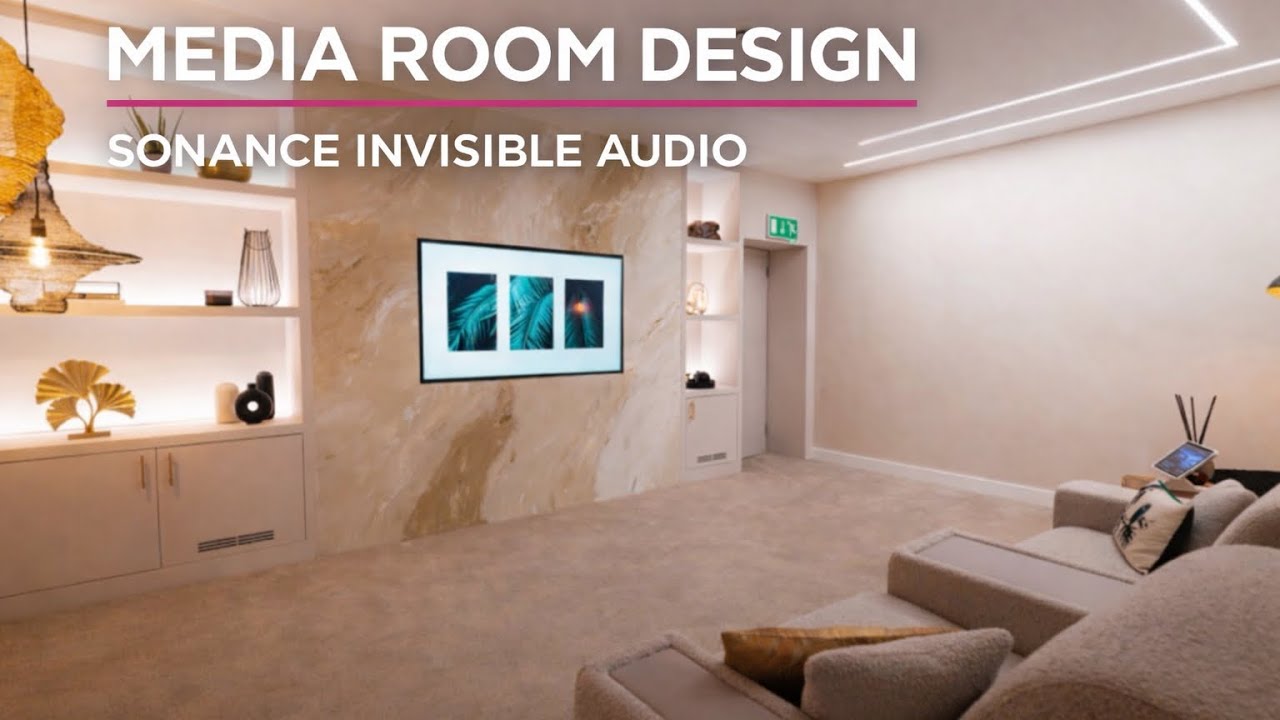
Most luxury cinema rooms get built at the very end of long construction projects. The client has been waiting two or three years. The house, the basement, or the extension is finally ready. Nobody wants a four-week on-site build for the cinema at that point. They want a working room.
Display Technologies (DT) — a UK B2B supplier and manufacturer of cinema hardware with more than twenty years of build history, most of it in London — has spent the last few years engineering their way out of this problem. Their Dynamic 2S frame system is a "cinema in a box": designed in 3D, pre-built off site, and installed in as little as two days. On a factory tour with Zebra Home Cinema, DT walked through the thinking behind it, from acoustic integration to porthole glass to why the plywood packing crates exist.
Who DT Is — The B2B Supplier Behind London's Luxury Cinemas
DT's positioning is unusual. Most companies in this category are either integrators (selling and installing end solutions into clients' homes) or manufacturers (making components that somebody else specifies and fits). DT is both. They supply cinema technology to other integrators on a B2B basis and they manufacture a significant portion of the hardware they sell.
"If we offer a speaker solution to someone, we really understand every bit of how we're going to get the best performance of that speaker. How is the room going to be constructed? What's the layout of the speaker? How are we going to do the acoustic treatment? What's the fabric going to do when it goes in front of it? We have the data. We know how to do all of these things. That's what makes us different to every other company out there."
The "we know the fabric" detail is telling. Acoustically transparent fabric in front of a speaker is not neutral — its weave density, material, and mounting all have measurable effects on high-frequency response. A company that sells the fabric and the speaker and the frame they both attach to can engineer the performance of the finished wall. A company supplying only one piece can't.
DT manufactures:
- ▪Screen frames and masking systems (including the Dynamic 2S range)
- ▪Mounting brackets for speakers and hardware
- ▪Porthole glass (the optical glass through which a projector shoots into an acoustically-separated projection room)
- ▪Cinema frames designed for rapid on-site assembly
- ▪Plywood shipping crates engineered for safe delivery
The Dynamic 2S Frame — Two-Way Side Masking Explained
The flagship product in the demo was the Dynamic 2S frame. "2S" stands for two-way side masking. In a cinema with a scope-ratio screen (2.35:1 or 2.40:1 aspect ratio), playing 16:9 content requires the screen's side masks to close inward to frame the 16:9 image cleanly against black. Playing scope content requires the masks to retract outward to reveal the full 2.40:1 width.
Two-way side masking is the motorised system that performs that transition without the audience needing to adjust anything.
The Dynamic 2S is DT's standard frame — the largest screen size they offer in that product line. Projects that require a wider screen than the Dynamic 2S's maximum move up to a different, wider frame system. But for most luxury home cinemas (roughly 10-foot screens and under), the Dynamic 2S is the category workhorse.
Critically, the frame is independent of the room's walls. That matters for acoustic treatment, for wall finish, and for installation flexibility.
The "Cinema in a Box" Philosophy
The defining DT design choice is that everything that can be done in the factory, is done in the factory. The frame that arrives on site already includes:
| Feature | What's pre-integrated | Why it matters |
|---|---|---|
| Speaker mounts | Integrated boxes on the frame itself | Speakers slot in; no on-site wall-building for speaker brackets |
| Wall independence | Frame stands free of the room walls | Acoustic treatment can be applied to the walls behind, without affecting the screen |
| Porthole glass positions | Pre-cut apertures | The projection porthole is already located and finished |
| Lighting apertures | Pre-cut holes with quick-connects | Cinema-appropriate lighting drops in, cabled |
| Finishes | Already applied | No on-site painting, staining, or trim work |
| 3D design | Every element modelled before manufacture | The room's install geometry is known in advance |
The practical consequence is that the space arrives ready to receive the frame, and a two-day install replaces what would otherwise be a multi-week build. For integrators working on projects where the cinema is the last room to be finished in a three-year luxury build, this is the product — and nothing else is close.
"This is kind of our ultimate cinema in a box, if you like. It's very useful for those rooms where you can't disrupt the room. Any room. Because it's independent of the walls, the room is free to put acoustic treatment in easily. The finishes are already there. We've got holes for lighting and the lighting will be in before that actually goes out with quick-connects. You take the space, the space is ready to receive this, and within two days easily the whole thing is in and installed ready to sit and watch a movie."
Porthole Glass and What Projection Actually Needs From a Wall
In a properly specified cinema, the projector does not sit in the viewing room. It sits in an acoustically-isolated projection room behind the rear wall, projecting through a piece of porthole glass — a purpose-made optical pane whose coating is engineered for minimum interference with the projected image.
DT manufactures their own porthole glass, and the factory tour included a sample of their PHGS (small porthole glass) — the compact version, for single-projector rooms with a straightforward throw geometry.
Why does this matter? Three reasons:
- 1.Noise isolation. Reference-level projectors — especially high-brightness models for large screens — run cooling fans that make meaningful noise at close distance. Separating the projector into its own room eliminates that noise from the viewing environment.
- 2.Heat management. High-lumen projectors dump significant heat. A separate projection room can be ventilated directly to the building services without the cinema's HVAC having to fight it.
- 3.Image quality. A proper porthole-grade glass has anti-reflective coatings and optical specifications that a generic window pane simply doesn't have. The small amount of attenuation it introduces is engineered, predictable, and far smaller than the compromises of running a noisy projector in the room itself.
Engineering the porthole into the frame — rather than asking an on-site carpenter to build one — means the optical alignment, sealing, and sound isolation around the aperture are guaranteed.
Why the Cinema Always Gets Built Last
There's a commercial lesson hidden in this product category. Cinema rooms in luxury residential projects are almost always the last space to be completed. That's not sequencing accident. It's the nature of luxury construction.
- ▪The cinema depends on finished services (power, AV cabling, HVAC, network) throughout the rest of the house.
- ▪The cinema's wall surfaces often need to be finished after speakers and screen are fitted.
- ▪Acoustic treatment requires final-dimension rooms.
- ▪Seating and upholstery are typically bespoke and take months to deliver.
- ▪Clients frequently change their minds about the spec as the house progresses.
This means the installer arrives on site at exactly the point where the client's patience is lowest and the construction team is ready to leave. The on-site window available for building a reference cinema has collapsed to days, not weeks.
DT's entire engineering philosophy is a response to that reality: every piece of on-site labour that can be moved into the factory, should be moved into the factory. The cinema-in-a-box arrives tested, finished, and cable-ready. What remains on site is positioning, final calibration, and the client handover.
Key Takeaways
- ▪DT (Display Technologies) is a UK-based B2B AV supplier and manufacturer with more than twenty years of cinema-build experience, supplying integrators across the London luxury-cinema market.
- ▪The Dynamic 2S is DT's flagship standard-frame system, with two-way side masking for clean transitions between scope and 16:9 content.
- ▪The cinema-in-a-box design philosophy pre-integrates speaker mounts, porthole glass apertures, lighting holes, finishes, and quick-connect cabling so that on-site install collapses from multiple weeks to roughly two days.
- ▪The frame is independent of the room's walls, which lets the acoustic treatment be applied to the walls behind without affecting the screen geometry or the masking performance.
- ▪DT manufactures their own porthole glass (including the compact PHGS), which matters because a proper porthole isolates projector noise and heat from the viewing room while preserving image quality through engineered coatings.
- ▪The economics of luxury residential construction make the cinema the last room to be finished. DT's design priorities exist to make that last-room reality compatible with reference-level performance.
Frequently Asked Questions
What is Display Technologies (DT)?
DT is a UK-based business-to-business supplier and manufacturer of home-cinema technology. They supply integrators across the UK with screens, masking systems, mounting hardware, porthole glass, and pre-engineered cinema frames, and they also design and manufacture many of these products in-house.
What does "Dynamic 2S" mean?
The "2S" in Dynamic 2S stands for two-way side masking. It's a screen frame whose side masks motorise inward for 16:9 content (to mask off the unused width) and outward for scope content (2.35:1 or 2.40:1) to reveal the full image. It's DT's standard-frame flagship.
What is a cinema-in-a-box installation?
A cinema-in-a-box is a pre-engineered cinema frame and screen system, manufactured off site with speaker mounts, porthole apertures, lighting holes, finishes and cabling quick-connects already integrated. Once a prepared room is ready to receive it, a full install can be completed in roughly two days rather than weeks.
Why is porthole glass used in luxury home cinemas?
A porthole puts the projector in an acoustically-isolated room behind the rear wall and shoots the image through purpose-made optical glass into the viewing space. This eliminates projector fan noise and heat from the cinema, and a proper porthole-grade glass with anti-reflective coatings preserves image quality far better than a generic window pane.
How long does a DT cinema take to install?
With a prepared room (pre-cabled, pre-serviced, and ready to receive the pre-built frame), a DT cinema-in-a-box install is typically completed in approximately two days. This contrasts with the multiple weeks a fully on-site cinema build would otherwise require.
Why is the cinema usually the last room finished in a luxury build?
Because it depends on every other service being complete — power, HVAC, cabling, network, wall finishes, acoustic treatment. Client patience is at its lowest by that stage, and on-site time is at a premium. DT's product philosophy is explicitly designed around that last-room reality, moving as much work as possible into the factory so the on-site window stays small.