Between them, Sharon and Harun Leo play something close to twenty instruments. They went viral on YouTube during lockdown with a cover of the theme from Turkish-Pakistani drama Ertuğrul, shot inside a single room with what seemed like one of them playing every layer. Their concerts now sell out across South Asia, Europe, and the Gulf.
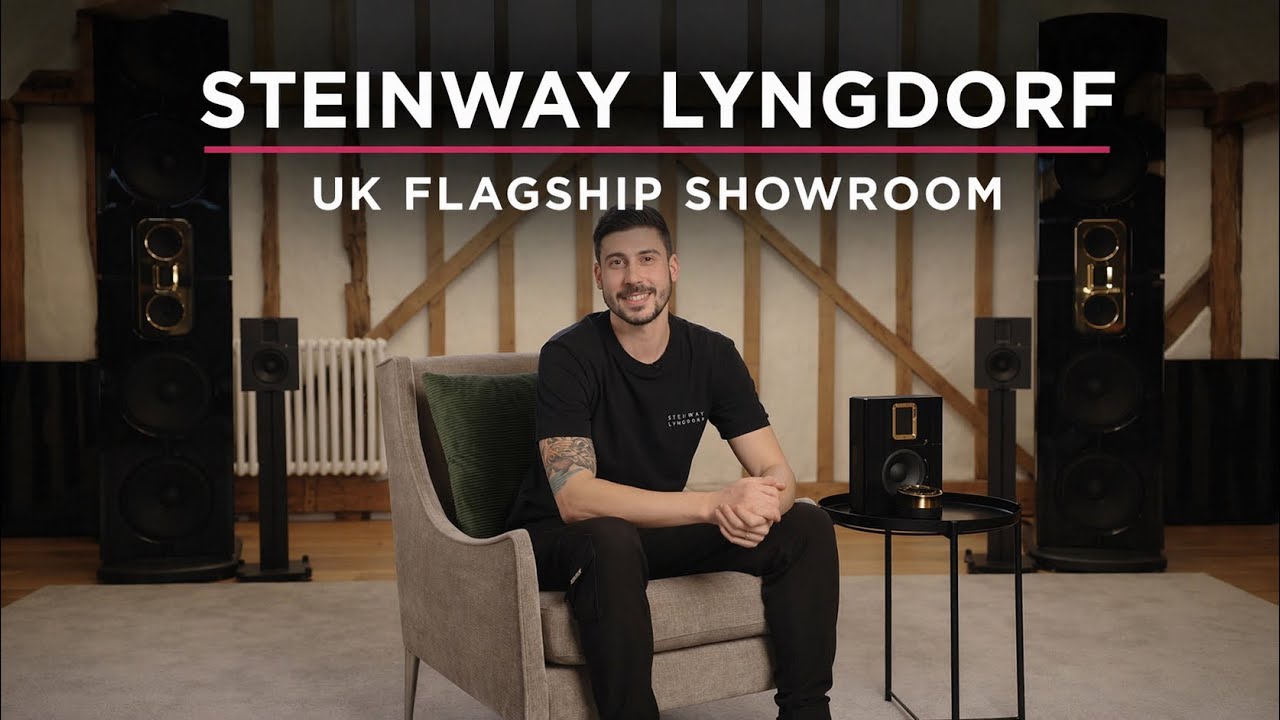
Zebra Home Cinema met them at the Steinway Lyngdorf UK showroom, where they had been invited to listen to Peter Lyngdorf's reference speaker range as musicians, producers, and recording artists. The twins picked their favourite speaker. It turned out to be Peter Lyngdorf's favourite too.
Who the Leo Twins Are — Viral Cover, Classical Roots, Fifteen Instruments
The Leo Twins are a Pakistani duo whose story is a quiet argument for what sustained practice can do. Harun started on tabla, the two-drum classical Indian percussion instrument, learning in the Punjab gharana style from their older brother, Ashir Sidhu. From that rhythmic foundation, he expanded across:
- ▪Percussion: tabla, darbuka, djembe, cajón, bongos, congas
- ▪Strings: mandolin, rubab, ukulele, oud, banjo
- ▪Main instrument now: guitar
Sharon plays violin as her primary instrument, with cello, harmonium, and several percussion instruments in reserve.
Their work ethic made them what they are. Neither went to a conservatory. Both studied pre-engineering because that's what their parents wanted — a professional career with a stable income — and music was a thing they had to prove could be a livelihood before it was permitted to become one.
From Church Music and Call Centres to Sold-Out Concerts
The Leo Twins came out of family church music in Pakistan. Hymns, worship songs, jam sessions between siblings at home. Their elder brother taught Harun the classical tabla discipline that underpins everything he now plays.
"We used to do college. Then we used to do call centre. Then we used to buy instruments from the money we get from call centre. And then we used to support family as well. It was a very hard work — a tough time. But we proved them that it can be a steady income for us, and it can be a professional career for ourselves."
The call centre and the classroom financed the instruments. The instruments financed the career. The career eventually financed the independence to choose it. Along the way they quietly added music production to the CV — a detail the twins emphasise, because audiences often see them only as live instrumentalists and miss that they're working producers too.
The chemistry on stage — the small nods, the finished-each-other's-phrases musicality — is a product of the same family lineage.
"When I play violin, he knows exactly what I'm going to play next. Same goes with me. It's a beautiful, unique bond. It reflects in our music as well."
Their inspirations are a revealing mix: Yanni, the Greek-American composer whose symphonic world-music work filled stadiums in the 1990s; Hans Zimmer; and in the Pakistani/classical tradition, artists like Nusrat Fateh Ali Khan (and the sub-continental orchestral and qawwali tradition more broadly).
How Musicians Listen to Speakers (Details Producers Can't Unhear)
Reviewing a speaker system with a working music producer is a different exercise from reviewing one with a film enthusiast. Producers spend weeks inside individual tracks. They know what the hi-hat really sounds like, because they placed it in the mix. They know where the low-end starts to smear when a system can't keep up, because they had the shelving EQ open when they tracked it.
Harun explained what he was actually listening for.
"We are just very focused on the details we always work on. When we were listening to our tracks on the speakers up there, we could hear those details and that clarity — the notes. And we were like: oh. That's the audio everyone should have."
This is a harder test than "does it sound good." The question a producer is asking is: does the system reveal things about my own mix that I know are there but cannot hear on ordinary systems? If yes, the system is a reference. If no, it isn't.
The twins' verdict on the Steinway Lyngdorf line: ten out of ten. Sharon went further: the perfect output for a home theatre. It's the sort of comment a reviewer would flag as over-enthusiastic — except that the people saying it had spent years inside the tracks they were hearing played back.
The Steinway & Sons Model A — The Twins' Pick
Asked to stand next to their favourite speaker, the Leo Twins chose the Steinway & Sons Model A.
The Model A sits mid-range in the Steinway Lyngdorf speaker hierarchy — above the more domestic Model B and below the flagship Model D. For a residential space with proper acoustic treatment and a listener at a sensible distance, it's the speaker most industry insiders will point to as the sweet spot of the Steinway Lyngdorf line: reference performance at a scale that fits real rooms.
What the twins picked up on specifically:
- ▪Clarity in the midrange. The register where most recorded instruments live.
- ▪Neatness. Their word — meaning the absence of smearing, the cleanness of individual note starts and ends.
- ▪Design integration. The Model A is physically beautiful. For a product sold in living rooms, that matters.
Peter Lyngdorf, the industry veteran who owns the company, has repeatedly named the Model A as his own personal favourite.
Why the Model A Is Peter Lyngdorf's Own Favourite
Peter Lyngdorf is one of the most consequential figures in modern high-end audio — a founder of multiple successful audio brands over a forty-year career, and the force behind what is now the Steinway Lyngdorf reference speaker portfolio. When the person who designed the line prefers the same model two Pakistani musicians picked after three hours of listening, it's worth asking why.
The Model A's design choices that tend to come up in serious listening:
- ▪DSP-based room correction integrated directly into the Steinway Lyngdorf signal chain, so the speaker compensates for room acoustics rather than fighting them.
- ▪All-digital signal path from source to transducer, avoiding the accumulated distortions of analogue amplification stages.
- ▪A transducer array and crossover design specifically tuned for coherence at real-room listening distances, which is different from the nearfield conditions of a mastering room.
- ▪An industrial-design language that can plausibly share a room with a grand piano — which, given the Steinway partnership, matters.
This is the speaker a serious music household ends up at when the primary listening material is actual music played by real instruments, rather than film soundtracks engineered for cinema-scale impact.
Key Takeaways
- ▪The Leo Twins (Sharon and Harun Leo) are a Pakistani guitar-and-violin duo with classical percussion roots and around twenty instruments between them. They went viral during lockdown with a multi-instrument cover of Ertuğrul's theme.
- ▪Their musical foundation is classical Punjab gharana tabla, taught in the family by their elder brother. That rhythmic training underpins everything Harun plays today — including his now-principal instrument, guitar.
- ▪The twins' career path runs through call-centre shifts funding instruments, parental pressure to study engineering, and the slow demonstration that music could be a viable income. Both are now also working music producers, not only performers.
- ▪As producers, they listen to speakers for whether the system reveals the micro-details they placed in their own mixes. Their verdict on Steinway Lyngdorf's range: ten out of ten — the perfect output for a home theatre.
- ▪Their favourite speaker in the range was the Steinway & Sons Model A — the same model that Peter Lyngdorf, the company's founder, picks as his own personal favourite. The Model A is widely regarded as the sweet spot of the Steinway Lyngdorf range for real residential listening at reference performance.
Frequently Asked Questions
Who are the Leo Twins?
The Leo Twins are Sharon and Harun Leo — a Pakistani musical duo known for virtuosic multi-instrument performances across guitar, violin, tabla, cello, harmonium, and a wide range of world-music percussion and string instruments. Their viral lockdown cover of the theme from Ertuğrul is one of the most-watched fan covers to come out of South Asia during that period.
How many instruments do the Leo Twins play?
Close to twenty between them. Harun plays roughly fifteen, including tabla (his original instrument, classically trained in the Punjab gharana style), darbuka, djembe, cajón, bongos, congas, mandolin, rubab, ukulele, oud, banjo, and — now his principal — guitar. Sharon leads with violin, and also plays cello, harmonium, and percussion.
What speaker did the Leo Twins prefer at Steinway Lyngdorf?
The Steinway & Sons Model A. They cited its clarity in the midrange, the "neatness" of note attacks and decays, and the coherence of detail across their own recordings as the reasons. Peter Lyngdorf, the founder of Steinway Lyngdorf, also names the Model A as his personal favourite.
Why is the Steinway & Sons Model A a common reference speaker for musicians?
Because it is designed for real-room listening with DSP-based room correction, an all-digital signal path, and a transducer and crossover system optimised for coherence at residential distances rather than nearfield studio conditions. For musicians who are listening to the music they themselves produced — and who want a speaker that reveals rather than flatters the mix — it's a speaker that tends to win A/B auditions against both larger and smaller models in the range.
What was the Leo Twins' path into full-time music?
Family church music first, taught classical tabla at home by their elder brother. They studied pre-engineering at their parents' insistence while working call-centre jobs to buy instruments and support the household. They proved music could be a steady income, moved into full-time performance, and later added music production to their portfolio. They now tour internationally as a live act and work as producers between tours.