The Furious had already been mixed twice before Jess Parks and Brandon Proctor got their hands on it.
Kenji Tanigaki's martial arts film came out of Hong Kong with its sound finished, by two separate crews working in China on tight money and tighter schedules. It played Toronto. It got the reviews. And then the American distributors who wanted it came back with a consistent note: the mix was built for the audience it was originally made for, and it needed to be brought up to what a wide Western release expects of dialogue clarity, sync, and impact.
That job went to Parks and Proctor, both re-recording mixers, both of whom describe the work in the same word: honing.
"We took over the great work that they had already done on a very tight budget and tight timeline, and we took it the extra 10, 20% to bring it into the room, to make it hit harder."
What follows is a conversation about how a fight scene actually gets built, why more sound usually means worse sound, and the single idea that changed how both of them think about mixing.
Two Very Different Roads to the Dub Stage
Parks and Proctor arrived at the same console from opposite directions.
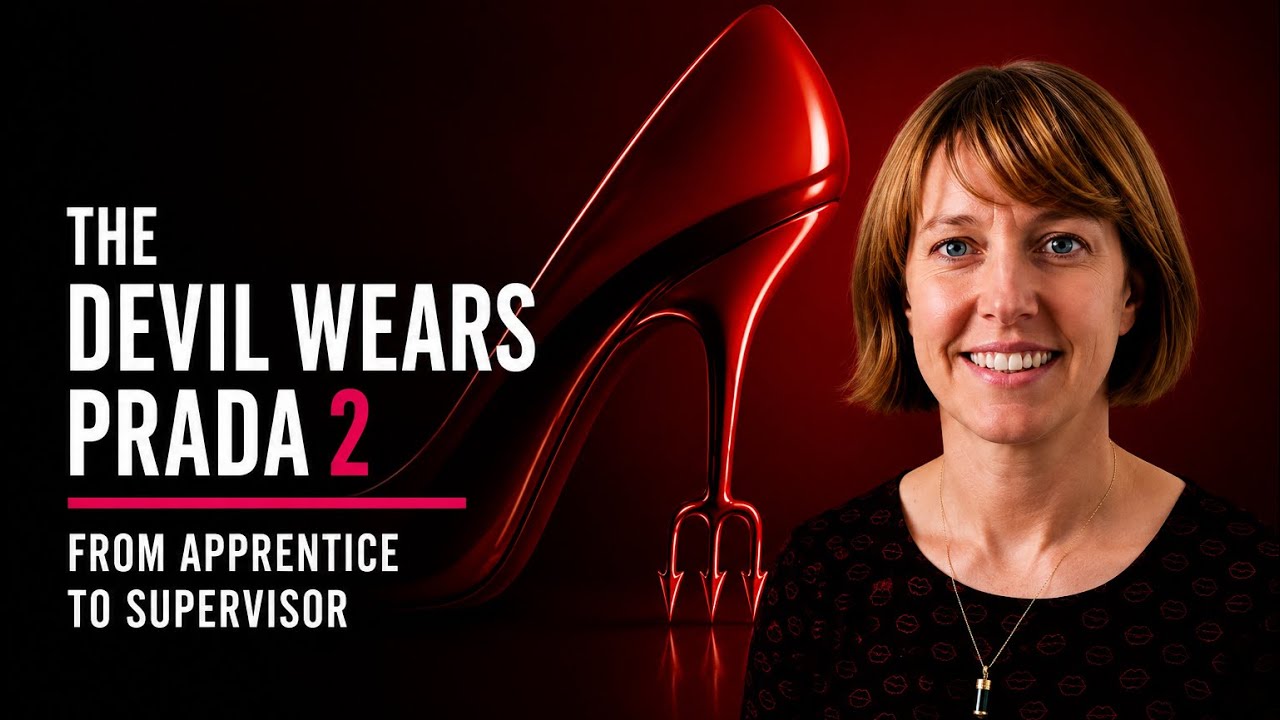
Jess Parks moved to Los Angeles in 2010 and took a job at Bad Robot as a post coordinator. She spent years as a post supervisor, then became a studio executive at Sony Pictures. In 2020, just before the world shut down, she told her team she wanted to stop supervising and start mixing.
"The dub stage has always been my favourite place. As a post supervisor, you're there from edit to pulling the reels out of the poor director's hands, because it's just time to deliver."
Her reason for wanting to be on the stage rather than managing it is worth quoting in full, because it explains what mixing does for a film:
"The thing that I hear most is tired, exhausted, spent filmmakers saying, 'Oh my gosh, I made a movie. It actually sounds like a movie and it feels real.' And the tension goes, and now we're flowing, we're trading ideas, we're taking this thing to the next level, adding what sound adds to it, which is the third dimension that comes off the screen."
She asked everyone she already knew to show her how they did their jobs. Her credits as a post supervisor and executive include two Star Trek films, Venom and its sequel, both Jumanji films, and The Girl in the Spider's Web.
Brandon Proctor started in the Bay Area, out of San Francisco State, working in music studios and networking the hard way, in a period before social media existed. He wrote up what studios were doing for a column by a local engineer, which was really an excuse to call people and introduce himself. He was about to take a job in Los Angeles when a girlfriend's remaining year of college made him try Skywalker Sound first, because he knew people there.
He was working there a week later.
"It's kind of like, what? It's just such an incredible community. The people there are like a family and they really take care of everybody that comes there."
He spent his first stretch in the machine room, slinging mag and tweaking dubbers, right as the industry crossed from analog to digital. He taught himself Pro Tools at Skywalker at night, on animation shorts, because his college didn't have it yet, then asked whoever he was assisting the next day how to do the thing he'd failed to do the night before.
Ten years of what he calls the wild west of the digital age followed. Along the way: Finding Neverland, Borat, All Is Lost, both A Quiet Place films, Black Panther, Sinners, and Predator: Badlands. He has an Academy Award nomination for Black Panther and BAFTA nominations for the Quiet Place films and All Is Lost.
The single most valuable part of the education, in his telling, wasn't technical:
"You got to hear how they made decisions and why they made decisions and what was important. How these sound professionals would work with these directors and producers and picture editors and composers, and how they would bring their film to life."
Paying Your Dues Is Mostly About Knowing When to Shut Up
Both of them, unprompted, landed on the same advice for people starting out, and it has nothing to do with gear.
Parks:
"It is such a privilege to just be able to sit in the room. When you have the opportunity to do that when you're younger especially, you're so eager, you want to prove yourself, you want to have input and answers. And the truth is, you are in input mode. You need to be listening and watching and observing what's said and what's unsaid and what's said by who, when."
Proctor's version is more tactical:
"Especially if you're an assistant, speak when you need to say something. Maybe it's not going to be your idea even if you have the right idea. Maybe hold on to your cards. Maybe even give your idea to somebody else to express at the right time."
There is a hierarchy on a dub stage, and a subtext to it, and reading that correctly is a skill on the same level as knowing the console.
Fixing a Mix That Was Already Finished
The technical problem on The Furious split cleanly in two.
The dialogue. The film was shot in English, but English was not the first language of much of the cast. Some actors were speaking their third language. Audiences reported losing story because they couldn't parse certain lines.
Parks is careful about how she frames this:
"As somebody who has one language, I respect that. There is certainly no bad mark for not being a perfect American English pronouncer. It was not the performance that was struggling, for the most part. It was just the pronunciation."
The solution preserved as much of the original performance as possible. Parks worked with director Kenji Tanigaki and an ADR team who handle loop group and, crucially, voice matching. She would send them lines from the original actor and ask whether anyone in their stable of talent sounded like this person. Where a match existed, they could replace only what needed replacing and keep the rest of the original performance intact.
Tanigaki supervised those sessions himself, awake at all hours in a different time zone, listening to takes down a phone line.
The effects. Proctor's side was subtraction as much as addition. Two prior sound crews had generated an enormous amount of material, in at least two different digital audio workstations, all of which had to be consolidated into Pro Tools and then worked through.
"A lot of those sounds were there. It was just kind of clearing away for it, removing things that would get in the way."
His example is the moment the lead kicks off his flip-flops and runs barefoot through the streets. That transition is a story point. If the mix is too dense, you don't hear it, and the story point evaporates.
"Sometimes you get too many sounds and it's masking the cool sounds."
The Evolution of Martial Arts Sound, From Shaw Brothers to Now
The interesting historical question is what actually changed between Drunken Master and a modern action film. Both men agree the techniques haven't changed nearly as much as people assume. You still record whooshes. Every hit still has a whoosh and an impact.
What changed is depth and headroom.
Track count. A punch that used to be one or two elements can now be layered many times over in a Pro Tools session. Proctor mentions playing with ice chunks to elevate an impact, the kind of experimentation that only exists when you have the tracks to spare.
Repetition. Older films had a limited palette of whooshes and footsteps, which is why you hear the same sounds recur. Modern Foley coverage means feet can be genuinely naturalistic while the impacts stay heightened.
The subwoofer. This is the real break with the past.
"The kick hits shouldn't sound like kicks. You're using the subwoofer so you can feel the impact. That's something you didn't have back in the day."
That last point is the one worth sitting with if you're building a room to watch these films in. The low-frequency layer under a martial arts impact isn't decoration. It carries the information your body reads as force, and it's the first thing to disappear on a soundbar or a system whose bass management was never properly calibrated. You can hear the whole fight and still not feel a single hit.
Proctor also raised a subtlety about house style. On The Raid 2, which he mixed and designed, director Gareth Evans initially wanted everything as real as possible. Proctor's instinct was to match the sonic language of the first film instead.
"He's like, no, I really want it to be natural. Well, movie natural, or what kind of natural?"
Once they got into the mix, they discovered the answer was the language of The Raid. There's a grammar to it, and abandoning it made the film feel wrong even when it was more accurate.
The Idea That Reframes Everything: Sound Tells You Where to Look
The best few minutes of the conversation came from Parks, describing the lesson that took her from technician to mixer.
"There's the technical side of it, how to move the faders and how to turn the EQ. But then there's the art of it. And the art of it that you don't hopefully notice is that the sound is telling you what to look at and what's actually important right there."
She describes her early struggle with fight scenes: everything is happening at once, it all sounds crazy, and the instinct is to put in too much.
"That's an early lesson where you realise this is not reality. It's not realism or movie realism. It's not reality. You're telling a story."
Which means every shot has an intention about what the audience should attend to, and the mixer's job is to know what that is and serve it. Footsteps might get louder or quieter with no change in the character's distance from camera, purely because attention needs to move.
"You won't have noticed, because we've guided your attention to the next thing."
And then the line that reframes the entire case for a real sound system:
"That word that feels real is only a sound word. Sound is the only thing that reaches out into your body. So it is important how we deploy that."
That is a working mixer's argument for why the audio chain deserves the investment people instinctively put into the screen. Picture is something you look at. Sound is the only channel that physically arrives at you.
Does Working on Films Ruin Watching Them?
We asked both of them whether knowing how the sausage is made spoils the meal. The answers diverged in a way that says a lot about the two jobs.
Proctor needs distance.
"I need to take some time off of it, and then I can start feeling again."
He described a bake-off screening, where clips from ten films with notable sound play back to back in the same theatre. Sinners was one of them. While the audience around him was reacting to how good it sounded, he was cataloguing every note he never got to.
"I have tons of notes, but okay. You're just never done."
Parks watches differently from the start. Sound supervision begins with a spotting session: watching the film with the filmmakers, stopping constantly, asking what they hear in a given moment, and offering ideas where they don't yet know how to get what they want.
"They hired me for a reason. So I'm not sitting there just taking orders like a server. I'm contributing."
By the time she does a first watch, she's already imagining the finished version and filling in the gaps herself. Each mixer will see a film twelve times start to finish, which is nothing next to editorial. There's fatigue in that, and she has practices for staying engaged. But the bigger discipline is knowing what she can still change and letting go of the rest.
"Nobody wants to hear it afterwards. They don't care what you didn't do."
Proctor, meanwhile, has found the same thing Robitaille and others describe: watching with an audience gives the film back to you. He compares it to giving people tours of Skywalker Ranch and getting to see it again through their eyes.
What They're Working On
Both had projects they could talk about.
Jess Parks finished a film called Drifter earlier this year, about drifting, which has already screened to a large convention audience in Las Vegas. She also makes an ongoing podcast.
Brandon Proctor has Mayday coming to Apple TV+, a Sky Dance production he mixed about eighteen months ago, starring Ryan Reynolds and Kenneth Branagh. He describes it as an action film that turns out to be extremely funny, in which Reynolds crashes in the Soviet Union and the film becomes a buddy movie. He also recently wrapped Painter, from martial arts specialist Garrett Warren, featuring Walton Goggins and Amber Midthunder.
"If you love The Furious, you'll love Painter."
What They're Watching
- ▪*Midsommar*, which Parks was rewatching for the second time on a weeknight when her husband got home at 10:30. The sound in it, she notes, is incredibly effective.
- ▪*Predator: Badlands, which Parks singled out as a standout and Proctor worked on. She's a particular admirer of sound designer Will Files*: "Every time I'm like, wow, that sounded good, let me see who did that, and it's Will again."
- ▪*Toy Story 5, which Proctor took his four- and seven-year-olds to, praising Ren Klyce*'s work.
- ▪*Whalefall*, in production, most of which takes place inside a whale. Proctor is, understandably, curious.
- ▪Hitchcock, all of it. Proctor fell into a rewatch after To Catch a Thief turned up in a film he was mixing. His observation: how specific the sound is, how much Hitchcock did with the gap between a gun cocking and the music entering.
Parks also offered an observation that says something about the current state of the craft:
"We have so many incredibly talented professionals in the industry that it stands out more to me now when a movie sounds mediocre than when it sounds amazing."
Key Takeaways
- ▪*The Furious was remixed for Western distribution by re-recording mixers Jess Parks (dialogue and music) and Brandon Proctor* (sound effects), after two prior sound crews had already completed mixes in China on constrained budgets and schedules. The brief was clarity and impact, not reinvention.
- ▪Dialogue was rebuilt using ADR voice matching: because much of the cast was performing in a third language and audiences were losing story, Parks sourced voice-match talent so individual unclear lines could be replaced while preserving the original performances everywhere else. Director Kenji Tanigaki supervised the sessions remotely.
- ▪Martial arts sound has changed less in technique than in depth. The genuine break with the Shaw Brothers era is low frequency: modern impacts are designed to be felt through a subwoofer rather than heard as literal kicks, which is why bass management and calibration determine whether a fight lands physically.
- ▪More sound is usually worse sound. Proctor's work on The Furious was substantially subtractive, clearing space so story-carrying details, such as a character kicking off flip-flops and running barefoot, actually register.
- ▪Parks' central insight: a mix is not realism, it's direction. Sound tells the audience what to look at, and levels move with narrative attention rather than physical distance. As she puts it, the feeling of realness "is only a sound word. Sound is the only thing that reaches out into your body."
- ▪For anyone starting out, both mixers gave the same advice: the privilege is being in the room, and the skill is knowing when to speak.
Frequently Asked Questions
Who mixed The Furious?
Re-recording mixers Jess Parks and Brandon Proctor handled the mix used for Western distribution of Kenji Tanigaki's The Furious. Parks covered dialogue and music while Proctor covered sound effects, which is the standard division of labour between two mixers. The film had already been mixed by two earlier crews in China, and Parks and Proctor were brought in to raise dialogue clarity and increase impact for a wide release.
Why was The Furious remixed for Western release?
American distributors interested in the film gave a consistent note: the original mix suited the audience it was made for, but a wide Western release expected more from dialogue smoothness, sync, and impact. Audiences were also reporting that they were losing plot information because some lines were hard to parse, since much of the cast was acting in English as a second or third language.
How has martial arts movie sound changed since the 1970s?
Less than people assume in technique, and enormously in depth. Whooshes and impacts are still recorded the same way, but modern sessions layer far more elements per hit, and Foley coverage lets footsteps sound naturalistic while impacts stay heightened. The real difference is the subwoofer: impacts are now designed to be physically felt in low frequency rather than heard as literal kick sounds, an option that simply did not exist in the era of Shaw Brothers films.
What does a re-recording mixer actually do?
A re-recording mixer balances every audio element of a finished film, dialogue, music, sound effects, and Foley, into the final soundtrack. On most features the work is split between two mixers, one handling dialogue and music and the other handling effects. Beyond level balancing, the job is narrative: deciding what the audience should be paying attention to in each shot and using level, equalisation, and placement to direct that attention.
Does sound really need a subwoofer to work properly?
For action and martial arts content, yes. The low-frequency layer under an impact carries the information the body interprets as force, which is why modern fight scenes are designed with the subwoofer in mind. Systems without proper bass management, or with an uncalibrated subwoofer, reproduce the dialogue and effects while losing the physical component entirely, so viewers hear the fight without feeling it.
What is a spotting session?
It is the first formal step in film sound. The sound supervisor watches the cut with the filmmakers, stopping frequently to discuss what each moment needs. Directors describe what they hear in their heads, the supervisor proposes ideas for moments that have not been solved yet, and both sides establish the sonic concept for the film before any significant work begins.