Honest Advice
7 Home Cinema Mistakes That Waste Your Money
We have seen hundreds of home cinema builds. These are the mistakes that cost real money — and how to avoid every one of them.
The most expensive home cinema is the one that was built wrong and needs to be redone. Every mistake on this list costs real money — not hundreds, but thousands. We see them repeatedly across projects in Ontario and the UK, and they are almost always preventable.
Some of these mistakes come from bad advice. Some come from following internet forums instead of professionals. Some come from making specification decisions without seeing how they ripple through the rest of the room. All of them can be avoided with the right information, which is what this guide provides.
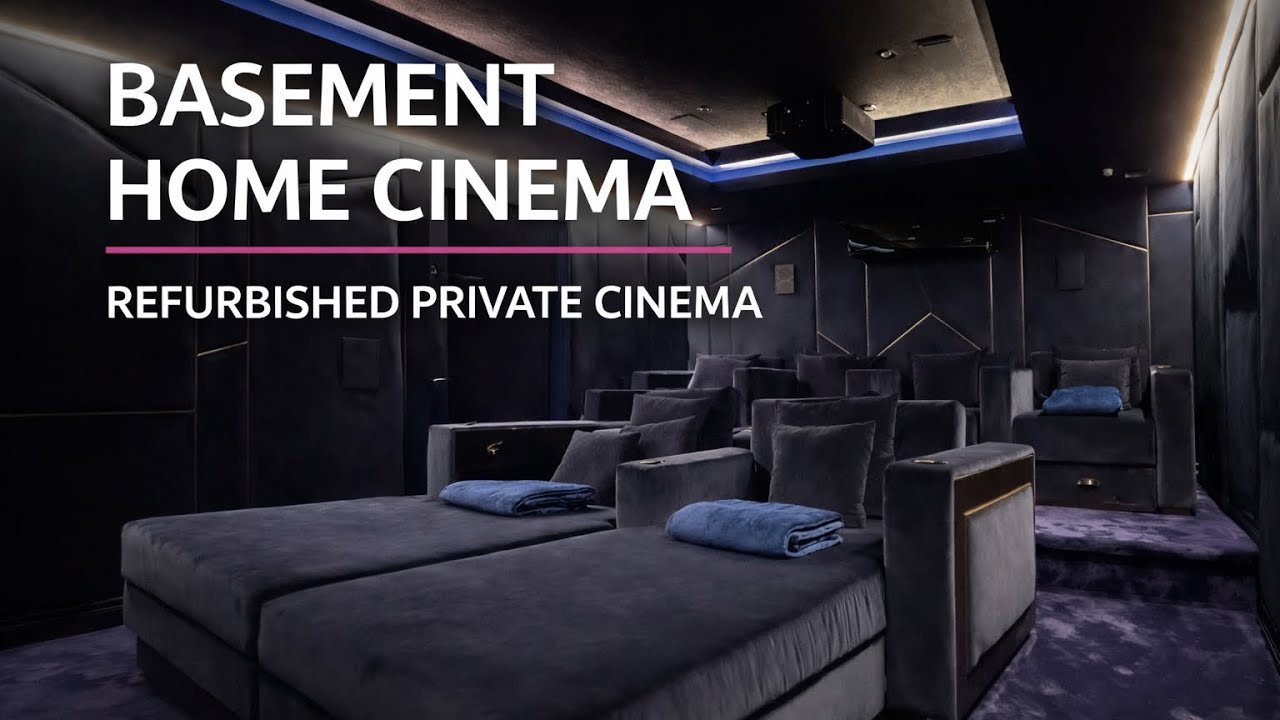
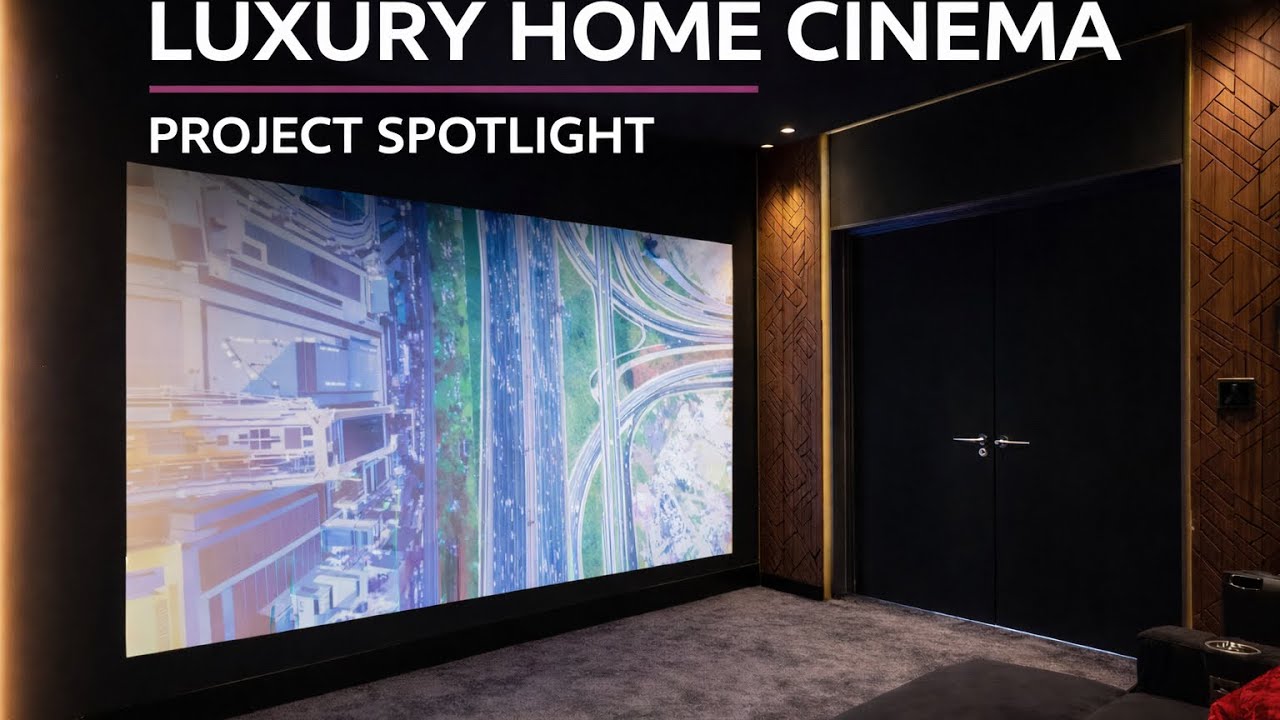
Skipping Acoustic Treatment
This is the number one mistake in home cinema construction, and it is the most expensive in terms of lost performance. Acoustic treatment — absorption panels, bass traps, and diffusion — controls how sound behaves in your room. Without it, your speakers are fighting the room instead of working with it. Bass builds up in corners and cancels at listening positions. Mid-range reflections from untreated walls smear dialogue clarity. High-frequency flutter echoes between parallel surfaces add a harsh, fatiguing edge to everything.
The fix is not complicated and it is not ruinously expensive. $3,000-$8,000 in properly designed and placed acoustic treatment will transform the performance of any speaker system at any price point. We have measured the difference: a treated room with $10,000 speakers will outperform an untreated room with $30,000 speakers. Every sound designer and audio engineer we have interviewed confirms this. It is not debatable.
Read: Do you always need acoustic treatment? →"If someone asks me where to spend their first dollar in a home cinema, the answer is always the room. Always. The speakers come second."
— Dr. Atif Ghaffar, Zebra Home Cinema
Buying an Outdated Star Ceiling
Star ceilings photograph beautifully. Instagram loves them. Clients ask for them constantly. And they contribute absolutely nothing to the cinema experience. A fibre optic star ceiling costs $3,000-$10,000 depending on density and complexity, and that money could fund the acoustic treatment your room actually needs.
Worse, star ceilings can actively harm performance. The fibre optic panels occupy ceiling space that should be used for acoustic treatment — specifically, ceiling absorption panels that control first reflections from your front speakers. In rooms with low ceilings, the star ceiling panel thickness reduces already limited headroom for Atmos height speakers.
If you want a star ceiling, budget for it separately and add it after the acoustic design is finalised. Never let it compete with acoustic treatment for budget or ceiling space. And understand that it is decoration, not performance — exactly like a fancy paint job on a car that has not been tuned.
Wrong Projector for the Room
Projector selection is one of the most common areas of mis-specification. The two most frequent errors are buying a projector that is too dim for the screen size and throw distance, and buying an ultra-short-throw (UST) projector for a dedicated dark room where a traditional long-throw would deliver dramatically better image quality.
UST projectors are designed for living rooms where a traditional projector mount is impractical. They sit inches from the screen and are engineered for ambient light environments. In a dedicated dark cinema room, a UST projector is the wrong tool for the job. A JVC D-ILA or Sony SXRD projector at the same price will deliver superior contrast, black levels, and HDR performance because it was designed for exactly that environment.
Brightness matters too. A projector needs sufficient lumens to deliver clean HDR peaks on your screen size at your throw distance. A projector that is "bright enough" at maximum output has no headroom for HDR highlights. As the Habitech reference cinema demonstrates, even a 15,000-lumen Christie runs at 45% to preserve HDR headroom. Your $3,000 projector at 2,000 lumens on a 120-inch screen is running at 100% with nothing in reserve.
Read: Why JVC D-ILA for a dedicated cinema →Specifying Within a Single Brand's Catalogue
Most specification work in this industry happens inside a working set of stocked brands — three to six manufacturers a given trade is fluent with. That makes total sense from an operational standpoint, but it tends to produce builds where Brand X is the answer to every question because Brand X is the only one in the comparison. The right speaker for your specific room dimensions, budget tier, and listening priorities may sit in a manufacturer the project team simply has not specified before.
The most common pattern: a build is centred on a single manufacturer's full system stack — speakers, processor, amplifiers, room correction, all from one brand — when a mixed system would have outperformed it for the same budget. This is not a criticism of the brand chosen; it is a criticism of the comparison having only one entry.
The fix is to separate the specification step (deciding what should be in the room) from the installation step (building it). An independent advisor evaluates across the full field — typically a dozen or more brands per category — then hands a documented specification to the installer who builds it.
Ignoring Seating Position
Most homeowners choose their seating position based on how the room looks with furniture in it. This is backwards. Seating position relative to the speakers, screen, and room boundaries is one of the most critical acoustic decisions in the entire build — and it costs nothing to get right if you plan for it.
Bass response varies dramatically with position. A seat placed exactly halfway between the front and back walls will sit in a bass null where the room's fundamental mode cancels itself out — you will hear almost no bass, regardless of how expensive your subwoofer is. Move that seat 60 centimetres forward or backward and the bass returns. The "golden ratio" position at approximately 38% of room length from the front wall avoids the worst modal problems.
Screen viewing angle matters too. THX recommends a 36-degree viewing angle from the primary seating position. If your screen is too far away, you lose immersion. Too close, and you see pixel structure or suffer eye fatigue. These calculations should be done before any furniture is ordered, not after.
Read: Planning seating layout and speaker positioning →Over-Spending on Screen, Under-Spending on Audio
Sound is 80% of the cinema experience. This is not our opinion — it is a consistent finding confirmed by every film industry professional we have interviewed, from Oscar-winning sound designers to Hollywood editors. Choosing the right speakers is critical, but only after your room is treated. Close your eyes during a well-mixed film and the experience is almost complete. Turn off the sound and watch the picture alone, and most of the emotional impact disappears.
Yet we routinely see clients allocate 60-70% of their budget to the display and 30-40% to audio. This is inverted. Our cost guide breaks down exactly how to allocate your budget. A sensible allocation for a dedicated cinema is 40-50% on audio (speakers, subwoofers, processing, acoustic treatment), 20-30% on display (projector and screen), and the remainder on seating, control, and aesthetics.
A $2,000 acoustically transparent screen with a $6,000 JVC projector behind it, paired with a $20,000 M&K Sound system in a treated room, will deliver a fundamentally more immersive experience than a $15,000 laser projector with a $5,000 soundbar-style setup. The sound is where the emotion lives. Budget accordingly.
Read: What justifies a high-end audio system →No Room Correction
Even in a well-treated room, residual acoustic problems exist. Bass modes, early reflections, and minor frequency response anomalies are facts of physics that acoustic treatment reduces but cannot eliminate entirely. Room correction technology bridges the gap by measuring your room's acoustic signature and applying digital correction filters in real time.
The three leading room correction systems are RoomPerfect (built into Steinway Lyngdorf and Lyngdorf processors), Dirac Live (available in processors from Storm Audio, NAD, and others), and Anthem ARC (built into Anthem receivers and processors). Each uses a calibration microphone and multiple measurement positions to build a correction profile. The results are not subtle — room correction typically produces the single largest measurable improvement in frequency response flatness that any component in the chain can deliver.
The mistake is either skipping room correction entirely, or relying on the basic auto-calibration built into a budget AV receiver. Entry-level auto-calibration (like Audyssey MultEQ in $500 receivers) is better than nothing but substantially less capable than Dirac Live or RoomPerfect. If you are spending $30,000+ on a cinema system, the processor should include a serious room correction engine. It is not optional at that level — it is the difference between a good system and a great one.
Read: Room correction with Lyngdorf Audio →The 7 Mistakes at a Glance
| # | Mistake | Typical Cost Wasted | Fix |
|---|---|---|---|
| 1 | No acoustic treatment | $5,000 - $20,000 in lost speaker performance | $3,000 - $8,000 in panels and traps |
| 2 | Star ceiling over acoustics | $3,000 - $10,000 | Add star ceiling after acoustics are done |
| 3 | Wrong projector type | $2,000 - $8,000 | Match projector to room type and screen size |
| 4 | Single-brand specification | $5,000 - $20,000 in sub-optimal spec | Compare across the full field before deciding |
| 5 | Bad seating position | $0 (but destroys bass response) | Calculate position before ordering furniture |
| 6 | Screen over audio budget | $5,000 - $15,000 mis-allocated | Allocate 40-50% of budget to audio |
| 7 | No room correction | $0 (but 20-40% performance left on table) | Use Dirac, RoomPerfect, or Anthem ARC |
Frequently Asked Questions
What is the biggest mistake people make when building a home cinema?
Skipping acoustic treatment. It is the single most impactful investment and the one most commonly overlooked. $3,000-$5,000 in properly placed panels transforms any system. A treated room with modest speakers will outperform an untreated room with expensive speakers. Every professional confirms this.
Are star ceilings worth it in a home cinema?
Star ceilings are decoration, not performance. They cost $3,000-$10,000 and can compromise acoustic treatment placement. If your budget is limited, skip it. If you want one, budget for it separately and add it after the acoustic design is complete. Never let a star ceiling compete with treatment for ceiling space.
How important is seating position in a home cinema?
Critical. Seating position determines bass response, imaging, and dialogue clarity. The 38% rule (sitting at 38% of room length from the front wall) avoids the worst bass modes. Moving a seat 30 cm can make more difference than upgrading your subwoofer. Calculate position before ordering furniture — not after.
Should I spend more on the screen or the speakers?
Speakers. Sound is 80% of cinema. Allocate 40-50% of your budget to audio and 20-30% to display. A good projector on a good screen with great speakers beats a great projector with mediocre audio every time. Read our cost guide for detailed budget allocation.
What is room correction and do I need it?
Room correction measures your room's acoustics and applies digital filters to compensate for problems. RoomPerfect, Dirac Live, and Anthem ARC are the leading systems. It is not a substitute for physical treatment, but a powerful complement. Any system over $15,000 should include a capable room correction processor.
The next step
Want to avoid these mistakes on your project?
An independent assessment of your space catches these problems before they cost you money. The first conversation is free.
Book a Conversation