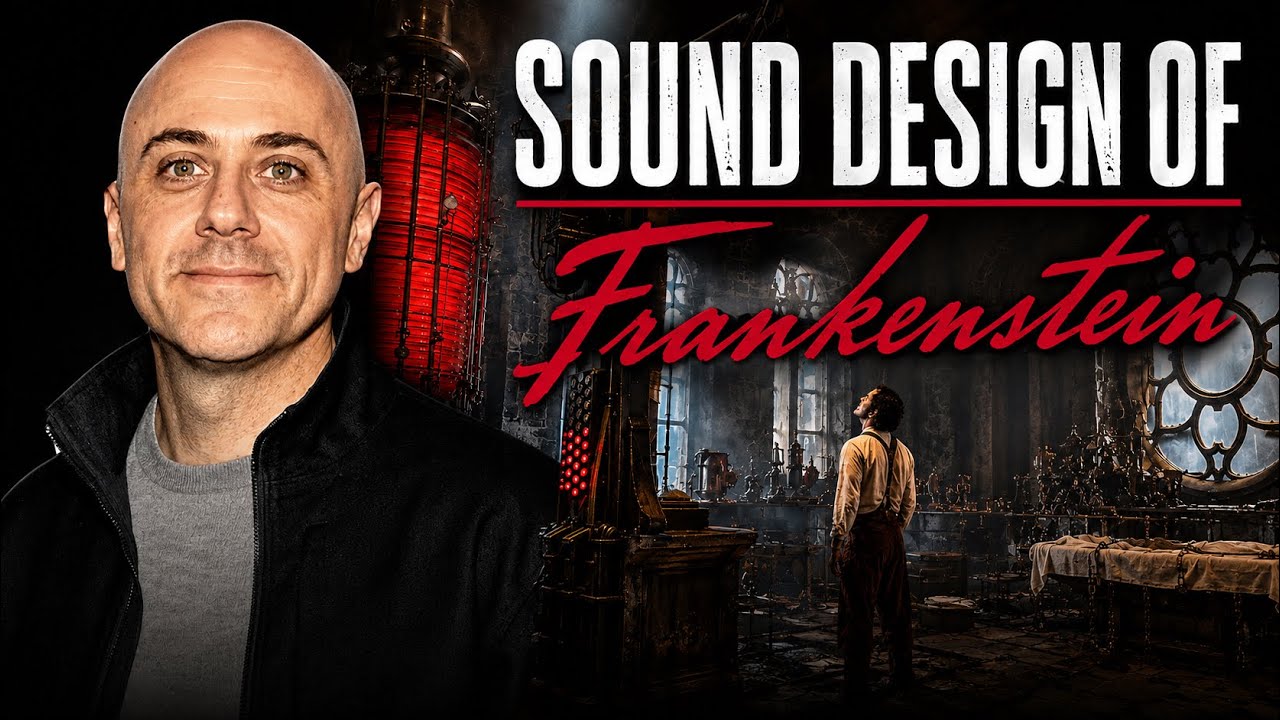
When you hear the sandworm erupt from the desert in Dune, you are hearing the product of sand avalanches in Qatar, singing dunes recorded at 3,000 feet above sea level, and a Bene Gesserit language invented specifically to give the Voice its power. Mark Mangini — the Oscar and BAFTA-winning sound designer and re-recording mixer behind Dune, Mad Max: Fury Road, Blade Runner 2049, and Aladdin — sat down with Atif for one of the most revealing conversations about the craft of sound design you will find anywhere. His core message: sound is not a technical layer applied after the story is made. Sound is storytelling.
Who Is Mark Mangini?
Mark Mangini is an Academy Award-winning and BAFTA-winning sound designer and re-recording mixer based in Los Angeles. His filmography spans four decades and includes some of the most sonically ambitious productions in cinema history.
| Film | Award / Nomination |
|---|---|
| Dune (2021) | Academy Award — Best Sound; BAFTA — Best Sound |
| Mad Max: Fury Road (2015) | Academy Award — Best Sound Design |
| Blade Runner 2049 (2017) | Academy Award nominee |
| Aladdin (1992) | Used recordings of his own children |
| Gremlins (1984) | Baby recordings of his sons used in creature sounds |
| The Lion King (1994) | Family sound library used |
His co-designer on Dune was Theo Green, with whom he shared supervising sound editor duties across a year and a half of production, leading to their joint Oscar win.
The Dune Sound: Building a World From Scratch
The central challenge of Dune was that it is set in an entirely alien environment. Every sound — from the mechanics of an ornithopter to the Voice of the Bene Gesserit — had to be invented, because no real-world reference exists for it.
The Voice
The Voice is one of the most iconic sound design achievements in Dune. Rather than simply applying electronic processing to dialogue, Mangini and Green researched the Bene Gesserit sect, their cultural history, and their significance within Frank Herbert's universe. From that research, they built a mythology and a language.
"It was critical for us to develop a voice that told you something. Part of our development of the voice was the research into the Bene Gesserit sect — who they were, what they meant to the culture, how long they had been around. We developed this concept that throughout time immemorial, there was a charismatic leader, a woman who was the source of power, who passed down the skills of the voice. We built a story that adds to the narrative of the Dune books."
Sound as additive storytelling — creating narrative that enriches the source material rather than simply reinforcing it.
Singing Sand Dunes: Recording in Qatar
The iconic low-frequency rumble of the desert environment in Dune has a real-world source. During a teaching engagement at the Qatari Film Institute, Mangini made a detour into the desert outside Doha.
"Near Doha, there's an expanse of desert where they have what they call singing sand dunes. The sand of certain kinds of sand dunes, there's a certain kind of sand at a certain humidity with a certain kind of movement that will emit a very bizarre kind of vocalization. I was determined to capture that for the Dune movie."
The expedition involved three land cruisers and a crew. To trigger the singing dune effect, a land cruiser was driven to the crest of the dune, engine cut off, then driven forward on the brake — forcing a sand avalanche. The sound produced by that avalanche of sand on specific sand at specific humidity conditions became raw material for Dune's audio landscape.
"I spent six hours in the burning sun, but the time went by like that. I was having so much fun because I was there with interesting people, recording equipment, doing what I love: capturing the sound of the world."
Sound Design as Storytelling: The Core Philosophy
Mangini's philosophy distinguishes between three modes of sound in cinema:
- 1.Sound as information — you hear an engine, you understand a car is present
- 2.Sound as reinforcement — the music swells as the emotion intensifies
- 3.Sound as storytelling — sound creates or expands narrative that did not previously exist
The third is where great sound design lives, and it is the mode Mangini pursues deliberately.
"Sometimes we're missing something. Other times we are actually adding to the story. Sometimes we can create a story that hadn't heretofore existed. And that's when sound really shines. Those are the moments we look for — when sound can actually lead the story a little bit."
His insight for filmmakers: engage the sound designer in pre-production, not post. The earlier the collaboration begins, the deeper the sound can be woven into the narrative fabric of the film.
Using His Own Family in Films
One of the most unexpected revelations: Mangini has systematically recorded the sounds of his own children from infancy — and used those recordings in major films.
"My granddaughter, with her father's permission, will, like my children, be recorded from infancy through whenever I stop deciding they're interesting. Baby sounds are particularly evocative — especially infant sounds. I've recorded all my kids and used those sounds in movies, including the Gremlins movies, Aladdin, The Lion King, and Blade Runner 2049."
His wife, he notes, has grown accustomed to being woken at 3am by a thunderclap — only to find Mangini in his underwear with a microphone out the window, chasing the perfect thunder crack. "Nothing is sacred when it comes to sound."
Top Gun: Maverick — High Praise From a Peer
Mangini's opinion on Top Gun: Maverick is significant, given that it came from a direct competitor in the awards cycle:
"That just checked all the boxes. I didn't care — I just checked all the boxes. The sound work is extraordinary. Good luck to them, I'm sure they're on the short list for awards. Boy, put that in a good home theatre and you'll rock some seats."
His note to anyone building a home cinema: Dune, Blade Runner 2049, and Top Gun: Maverick are the titles that demonstrate why the format exists. These are reference-grade recordings designed for exactly the kind of system Zebra Home Cinema builds.
Sound at Home: The Long View
Mangini's perspective on home cinema and streaming is pragmatic and generous. He does not shame anyone for watching on a phone — "sometimes that's all you can do." But he is clear about what is being missed.
"Sound has made such dramatic gains in the home — in ways perhaps that image hasn't as significantly tracked. What we call civilians now understand concepts like immersive sound, 5.1, Atmos. There's an awareness of sound and the importance of sound that's only going to increase."
His specific concern: films like Stranger Things involve over 4,000 people in production — extraordinary craft at every level. When that work reaches its audience on a mobile phone, the silence-to-impact dynamic, the sub-bass, the spatial dimension — all of it collapses.
"When you hear these things properly — with the bass levels, the dynamism between silence and suddenly bang — you get the richness of what was intended. That's the reason cinema was created. And now a great home cinema system lets you experience that without leaving your house."
Career Advice: Do It Every Day
Mangini's advice to aspiring sound designers is concise and uncompromising:
"If this is what you want to do, commit to it. Do it every day because you love to do it. Like a guitarist who would play whether getting paid or not. Hone your craft every single day. Generate something. Challenge yourself to do things that no one else is challenging you to do — and you will be ready when that call comes."
His blog at markmeandjeanie.com contains multiple in-depth essays on advice to young filmmakers — recommended reading for anyone serious about the craft.
Key Takeaways
- ▪Mark Mangini won the Academy Award and BAFTA for Best Sound for Dune (2021), alongside co-designer Theo Green
- ▪The Voice of the Bene Gesserit was designed from scratch using invented cultural mythology, not just audio processing
- ▪The iconic desert soundscape in Dune includes recordings of real singing sand dunes from Qatar — triggered by a Land Cruiser creating sand avalanches at 3,000 feet
- ▪Mangini has used recordings of his own children and grandchildren as sound sources in Gremlins, Aladdin, The Lion King, and Blade Runner 2049
- ▪His core philosophy: sound should add to the story, not just support it — the best sound design creates narrative that wasn't there before
- ▪Dune, Blade Runner 2049, and Top Gun: Maverick are the reference titles he identifies as essential home cinema demonstrations
- ▪Career advice: practise every day, whether paid or not — "do" is the only advice
Frequently Asked Questions
How did Mark Mangini create the sound of Dune?
Mark Mangini and co-designer Theo Green spent approximately 18 months on Dune, building the film's entire sound world from scratch. Key elements included the Bene Gesserit Voice (developed from cultural research and an invented mythology), singing sand dune recordings from Qatar (real low-frequency vocalisations triggered by sand avalanches), and extensive creature, mechanical, and environmental sound libraries. Warner Brothers made an unprecedented commitment to promote sound design as central to Dune's marketing campaign.
What films has Mark Mangini won Oscars for?
Mark Mangini has won the Academy Award for Best Sound twice: for Mad Max: Fury Road (2015) and for Dune (2021, shared with Theo Green). He received an additional Oscar nomination for Blade Runner 2049 (2017). He has also won the BAFTA for Best Sound for Dune.
Why is Dune considered a reference-grade home cinema film?
Dune features an extraordinary Dolby Atmos sound design with extreme dynamic range — from near-silence in desert sequences to the physical impact of a sandworm emerging from the earth. The film uses the full frequency range with exceptional low-frequency extension, spatial surround precision, and a compositional approach to silence and sound that is only fully revealed on a calibrated, full-range home cinema system. It is widely used as a demonstration disc in home cinema showrooms globally.
What does Mark Mangini say about watching films at home?
Mangini takes a generous view: mobile device viewing is sometimes unavoidable. But he argues that home cinema has made extraordinary technological gains — Dolby Atmos, high-quality subwoofers, and large format displays mean the home experience now approaches theatrical quality. His concern is that many viewers don't know what they're missing when they watch on small speakers. A great home cinema system reveals the full intention of the sound designers — the dynamic contrast, the spatial precision, the physical impact of the low frequencies.
How do you get into film sound design?
Mangini's advice: commit completely and practise daily, whether paid or not. Study the craft continuously, engage directors in conversations about sound during pre-production (not just post), and generate original work every day. His blog at markmeandjeanie.com contains multiple detailed essays on career development for aspiring sound designers.