Vincent Corver remembers the exact moment his life's direction changed. It wasn't at a concert. It wasn't at the Royal Academy of Music where he had just begun his master's degree. It was on a street in Lucerne, Switzerland, three years into running his own piano showroom, a week after he had been forced to switch off the lights and walk away for good.
He had two eggs and a piece of bacon left in his fridge, a laptop, a handful of t-shirts, and a single pair of jeans. That was everything. As he walked through the city, a bird began singing in the top of a tree.
"That was the happiest moment of my life up until that point. I realised that everything is just stuff. Things are meaningless. They come and go. I literally started from scratch."
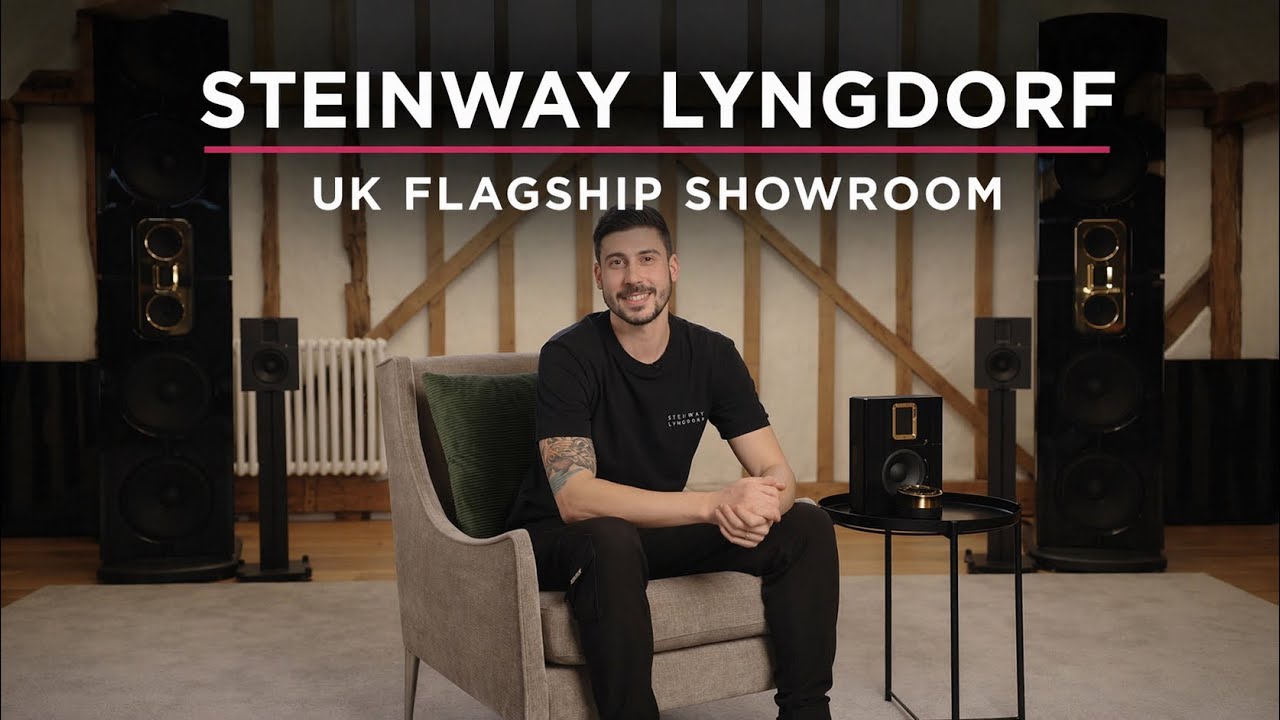
Fifteen years later, Corver is a Steinway & Sons pianist, a composer with more than 160 tracks on Spotify, a collaborator with Formula 1, Mercedes-Benz, Rolls-Royce and Ferrari, and the owner of a Zurich "show home" — a VIP gallery for Steinway Lyngdorf reference audio. In an interview with Zebra Home Cinema, he walked through the entire arc: Royal Academy to Harrods, Lucerne collapse, Qatar and Dubai, back to Switzerland, and the branch of his work he cares most about now — the medical case for why bad sound is actively bad for you.
The Royal Academy Pupil Who Decided He Needed Economics
Corver was a week into his master's degree at the Royal Academy of Music in London when he attended a concert of former students from the same institution. They were playing in a dark old school building on a poor instrument. The audience numbered two people. The pianists were talented — people he genuinely looked up to.
He stayed behind to ask the performer how his career was going.
"He said, well, this is my career. I play sometimes in a church. I play some chamber music. I was actually so disappointed, because my vision of having a solo piano career was simply much more exciting in my own head than how it was presented that day."
That conversation redirected everything. Corver went back to his room at the Academy and had a thought that he now considers the beginning of his adult career.
"If I ever die, people will write on my gravestone: he could play the piano very well. I can play the piano, but I don't know how to read a financial newspaper. I don't know how to write a business plan. I don't know anything about business, economics, or finance. Let me do my self-study on economics."
He started reading Wikipedia entries — this was during Wikipedia's earliest years — and looked for a job where he could learn the luxury-goods trade alongside his music. He found one.
Harrods, Four Pianos a Day, and the First Steinway Lyngdorf Model D
Corver joined the piano department at Harrods in London around 2004. He quickly discovered two things: he was good at selling pianos, and the Harrods piano department was unexpectedly the first point of contact with the reference audio world he didn't yet know existed.
Selling performance at Harrods was, in his recollection, straightforward. On one particular day he sold four to five grand pianos; he won salesperson of the month multiple times. The customer base was international, high-trust, and deeply aesthetic.
Two years in, Harrods took delivery of what Corver believes was the first Steinway & Sons Model D speaker system delivered to a UK showroom — the Steinway Lyngdorf flagship. This was roughly 2006 or 2007. For Corver, the moment of actually hearing the Model D was transformative. Over the next decade and a half, Steinway Lyngdorf would become the defining product relationship of his adult life.
Around this time he met Swiss conductor Kevin Griffiths, who invited him to Switzerland to record a CD with an ensemble Corver had founded — the London Seafriars Ensemble. Corver fell in love with Switzerland on that trip. He went home, told his mother they should move. Within weeks they were planning their own business.
2008 — The Lucerne Showroom
In May 2008, Corver and his mother opened what he describes as Switzerland's most exclusive piano showroom in Lucerne. Beautiful wooden floors. Steinway & Sons piano inventory. The cleanest possible execution of what he'd learned at Harrods — brought to Switzerland and made his own.
Five months later, the global financial crisis arrived.
They lasted three years. Corver took no salary for more than a year. He stopped paying rent — fortunately, he had a landlord who was understanding and communicative, and Corver kept him informed every step of the way.
In 2011, the showroom closed. Corver walked out for the last time and turned the lights off behind him.
"It was one of the worst, absolute worst periods of my life. Three years after opening the shop, we were forced to switch off the lights."
The Bird in the Tree
The mythology of the turning point is the bird in the tree on Lucerne's streets — but the mechanism underneath it was more prosaic. Corver was paying attention. He'd been sending Steinway & Sons international office his business research — including opening proposals for showrooms in Qatar and Dubai — throughout the final months of the Lucerne business.
Steinway & Sons had been watching. When the Lucerne showroom closed, they offered him the position of General Manager for Steinway & Sons in Qatar. Within weeks, Corver was on a plane to Doha.
It was not an escape. It was a very deliberate next chapter.
"Everything is just stuff. Things are meaningless. They come and go. I literally started from scratch."
Steinway & Sons Qatar and Dubai
Corver ran Steinway & Sons showrooms in both Qatar and Dubai — flagship showrooms that sold Steinway pianos and were among the first Middle Eastern locations to also feature Steinway Lyngdorf loudspeakers. Corver's reflections on that chapter — and on the Middle East as a commercial territory — are unusually unsentimental.
His observations:
- ▪Speed of decision-making is much faster in the Middle East than in most of Europe. Senior executives close deals in minutes that would take months in Germany or the UK.
- ▪Trust and longevity matter enormously. "People that do not go to the Middle East with genuine intentions will never make a penny. They will probably lose more than they will ever make."
- ▪Cultural heritage dynamics are different. Europe has centuries of musical and artistic heritage embedded in daily life; the Middle East is building that heritage quickly but at shorter time horizons. This affects both how luxury goods are received and how they are specified.
- ▪Spending flows are more international. Capital earned in the Gulf is often spent abroad — a dynamic that Western exporters understand intuitively but often miscalibrate.
Corver loved his time in the Middle East. He returns regularly. Close personal friendships from that chapter continue to shape his current work.
The "Luxury Brand Composer" — Sauber, Mercedes, Rolls-Royce
Corver's current defining professional identity was named for him by someone else — a cellist who has worked with both Hans Zimmer and Martin Tillman. Watching Corver's work over a few years, the cellist said: you're the luxury brand pianist.
The phrase stuck.
"I thought, that's really nice to hear from a friend. Sometimes if you can define yourself in three words where everybody understands exactly what you mean, it becomes really easy for people to understand."
The commercial model: Corver works directly with brands on sonic identity, rather than through music supervisors. His argument against the music-supervisor model is pointed. In his experience, music supervisors too often hire six or seven composers to pitch unpaid briefs, select none of them, and go with a library track anyway. Working directly, a composer can take a brand through a proper mood-boarding process, pair references to the brief, and deliver a sonic identity that matches the visual brand.
Recent projects:
- ▪*Fortissimo — a composition for Sauber*, the Swiss Formula 1 team. Corver actually brought his piano to the racetrack and composed the piece in dialogue with the car.
- ▪Mercedes-Benz — an event for senior management in October 2022; further work since then.
- ▪Rolls-Royce, Ferrari — previous automotive compositions.
- ▪Perfume houses, watchmakers, hospitality brands — a full cross-section of European luxury.
His framing of why this works: music reaches the emotional cortex faster than any other sense. The nose, the skin, the mouth, the eyes — all slower. A brand's sonic identity touches customers before its visual identity does. Most brands treat this as an afterthought. Corver treats it as the primary signal.
Why Bad Sound Is Actually Bad for You
The most useful digression in the conversation was Corver's medical case for reference-grade playback. He is not formally a health researcher; his reference point is clinical work he's been following in parallel to his music career.
One study he cited in detail: researchers subjected a cohort of premature babies to carefully-chosen music therapy through a reference audio system, and compared their brain development to a control cohort not subjected to music therapy. Weekly brain scans were conducted on both groups.
The outcomes:
| Metric | Music-therapy cohort | Control cohort |
|---|---|---|
| Brain development over the study period | Significantly accelerated | Baseline |
| Vital signs during music exposure | Stabilised (heart rate, breathing, blood pressure) | Variable |
| Oxygenation during music exposure | Improved | Unchanged |
The mechanism, as Corver described it: high-quality music in a properly-reproduced form calms the autonomic nervous system. Breathing slows. Heart rate drops. Blood pressure stabilises. Cerebral oxygenation improves. Brain development, over weeks of exposure, accelerates measurably.
The corollary — and this is the useful one for anyone who works in a shop, a mall, a supermarket, a call centre, or any environment where poor-quality audio plays all day — is the inverse.
"I think people underestimate how unhealthy it is to listen to poor-quality music. How stressful it can be. Your brain is constantly trying to balance out what I hear. It's the same thing with bad glasses — your brain is constantly trying to readjust to have a proper vision. Everybody knows how unhealthy it is to have the wrong prescription glasses. So let's see a sound system as a prescription as well."
The framing is memorable: a good sound system is a prescription, not a luxury. Ears want what they were built to process. Give them distortion, compression artefacts, and uneven frequency response for eight hours a day, and the nervous system quietly absorbs a cost the listener never articulates.
The Music Industry's Attention Collapse
Corver is clear-eyed about the industry he makes a living in. The modern music business, in his view, has lost artist retention. Consumers no longer remember artist names. They remember songs. Sometimes.
"Have you heard any other songs from the singer of Dance Monkey? No. Nobody remembers. It's the sad reality of instant fame but also instant overnight loss of fame."
The implications for a working composer:
- ▪Long-term artist brands are harder to build. A new piece of music has a days-to-weeks half-life on the attention scale.
- ▪Audience attention has fragmented. TikTok, YouTube Shorts, and short-form streaming have trained audiences to not retain music.
- ▪The living-room reference audience is shrinking. Most music consumption happens via headphones — in cars, on public transport, at the gym. The demographic of people who sit in front of a reference system and consume an album is, in Corver's framing, "forever shrinking."
His response to that landscape is to do more things, at more levels. His Spotify catalogue includes film scores, peaceful-piano singles, collaborations with trance DJ Paul van Dyk, library music for brands, collaborations with vocalists and other DJs, and film-score commissions. He has stopped defining himself as any single kind of artist.
"I don't see myself as an artist anymore. I see myself as — every time you release something, it's a product on its own. It's a life, a little person. Some do well and others don't. That's just the process of it. You can't rely on one strategy. You need to do many different things."
The Zurich Show Home — A Listening Gallery Rather Than a Shop
Corver's current Zurich space — visible behind him during the interview — is explicitly not a piano shop. He's stepped back from the transactional piano business; the Swiss market for new grand pianos is difficult, and his energy belongs elsewhere.
What it is, in his framing, is a show home / VIP gallery. A space where clients can:
- ▪Experience the Steinway Lyngdorf Model D — Corver's personal reference, which he calls "the time machine" for how completely it transports listeners into recorded concert venues
- ▪Hear purpose-curated demos — including a Hotel California live recording that stops first-time listeners in their tracks
- ▪Listen from unusual positions — Corver has installed a rear listening position, exploiting the Model D's back-radiation characteristic, so guests can experience the system from behind the speakers with left-and-right reversed but full acoustic integrity
- ▪Attend intimate concerts and events — the space is designed to host live performance with the audio system as a backing instrument
The philosophy behind it, borrowed from Peter Lyngdorf: if you give a good demo, people will never forget. Not every visitor will buy. That is explicitly not the point. The point is to create listeners who remember.
Key Takeaways
- ▪Vincent Corver is a Steinway & Sons pianist, luxury-brand composer, and Steinway Lyngdorf dealer based in Zurich. He has more than 160 tracks on Spotify, Formula 1 and automotive composition credits, and a "show home" VIP audio gallery.
- ▪His career began at the Royal Academy of Music in London, pivoted to learning economics and commerce at the Harrods piano department, and has included running his own Lucerne showroom (opened 2008, closed 2011 post-crisis), Steinway & Sons flagship showrooms in Qatar and Dubai, and his current Zurich gallery.
- ▪The 2011 Lucerne collapse — two eggs and a piece of bacon left in his fridge, a laptop, a few clothes — produced the defining insight of his career: everything is stuff, it comes and goes, start again from scratch. The Qatar offer from Steinway & Sons arrived weeks later.
- ▪Corver's commercial model is the "luxury brand composer" — working directly with brands on sonic identity rather than through music supervisors. Credits include Sauber (Formula 1), Mercedes-Benz, Rolls-Royce, Ferrari, and perfume, hospitality, and watch brands.
- ▪His underlying conviction: bad sound is actively unhealthy. Poor-quality playback forces the nervous system to compensate for distortion, raising stress levels over prolonged exposure. Good playback — by contrast — stabilises vital signs and improves brain development in clinical studies on premature babies.
- ▪The modern music industry has lost artist retention. Corver's response is to diversify widely — film scores, DJ collaborations, peaceful piano, library music, automotive work — and to stop defining himself as any single kind of artist.
- ▪His Zurich space is a show home, not a shop. The goal is listeners who remember, not transactions.
Frequently Asked Questions
Who is Vincent Corver?
Vincent Corver is a Steinway & Sons artist, composer, and luxury-brand music specialist based in Zurich, Switzerland. He is classically trained (Royal Academy of Music, London), composes extensively for brands including Sauber Formula 1 and Mercedes-Benz, has more than 160 tracks on Spotify across film scoring, piano solo, DJ collaboration and library music, and operates a Steinway Lyngdorf "show home" in Zurich.
What is Vincent Corver's Fortissimo composition?
Fortissimo is the original piece Corver composed for Sauber, the Swiss Formula 1 team. Corver took a piano trackside and composed the piece in dialogue with the car — a rare example of on-location automotive composition rather than studio-based scoring.
What happened to Vincent Corver's Lucerne piano showroom?
It opened in May 2008 as Switzerland's most exclusive piano showroom; five months later the global financial crisis began. The business survived three years without Corver drawing a salary for more than a year, before being forced to close in 2011. The experience led directly to his appointment as General Manager for Steinway & Sons in Qatar, which opened the Middle Eastern chapter of his career.
Why does Vincent Corver argue that bad sound is unhealthy?
Because the brain compensates for audio quality the way it compensates for poor-vision prescription glasses. Prolonged exposure to low-quality audio — distortion, compression artefacts, uneven frequency response — forces the auditory cortex to constantly rebalance the incoming signal, which is measurably stressful. Conversely, reference-quality playback stabilises heart rate, breathing, and blood pressure, and in clinical studies of premature infants, has been shown to accelerate brain development.
What is the Steinway Lyngdorf Model D and why does Corver call it "the time machine"?
The Steinway & Sons Model D is Steinway Lyngdorf's flagship reference speaker — a DSP-corrected, all-digital loudspeaker designed for reference residential listening. Corver calls it "the time machine" because of the completeness of its recreation of concert venues — specifically, he references a live Hotel California recording where the Model D transports listeners into the arena's actual acoustic environment.
How does Vincent Corver work with brands?
Directly. His model bypasses music supervisors in favour of a composer-to-brand relationship. He begins with mood-boarding and reference tracks, develops a sonic identity bespoke to the brand's positioning, and delivers finished compositions that become part of the brand's recognisable audio signature. His Formula 1 (Sauber), Mercedes-Benz, Rolls-Royce, and Ferrari credits all emerged from this direct-engagement model.
Where is Vincent Corver's showroom?
In Zurich, Switzerland. He has deliberately repositioned the space from a conventional piano shop into a "show home / VIP gallery" — focused on listening, demonstrations, and private concerts, rather than transactional sales. It features Steinway Lyngdorf reference speakers and a dedicated rear listening position exploiting the Model D's back-radiation characteristic.