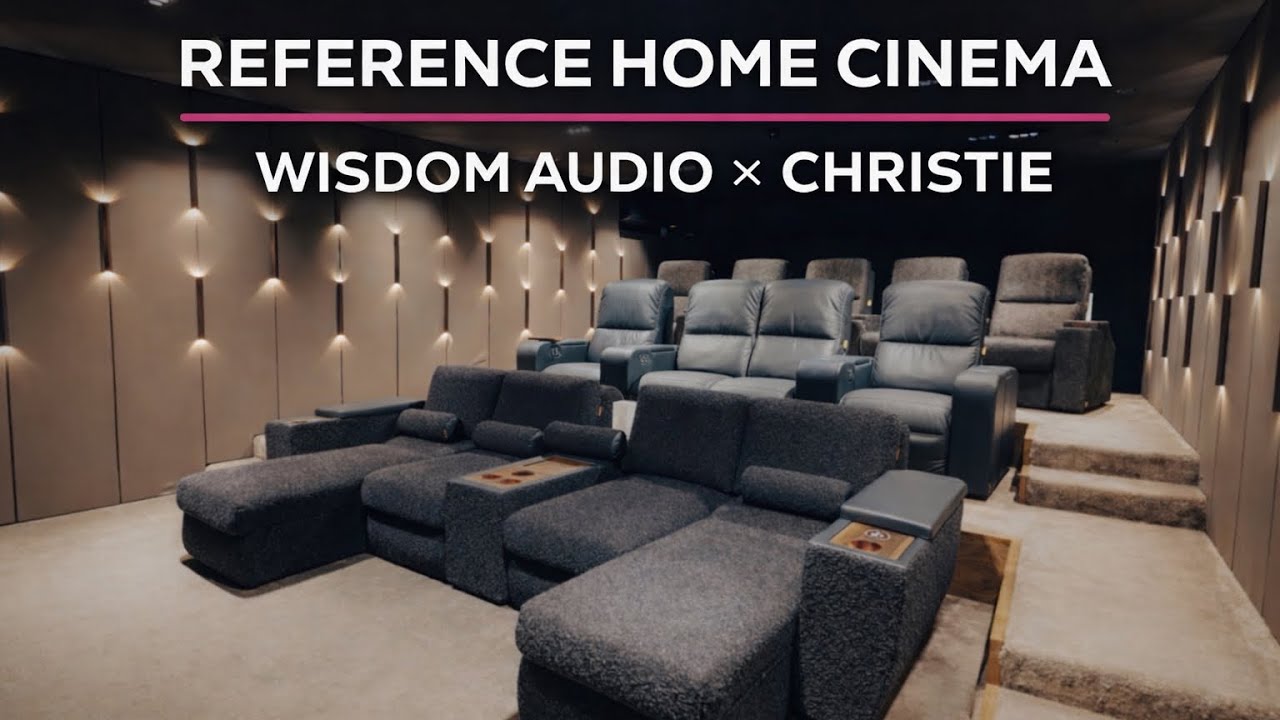
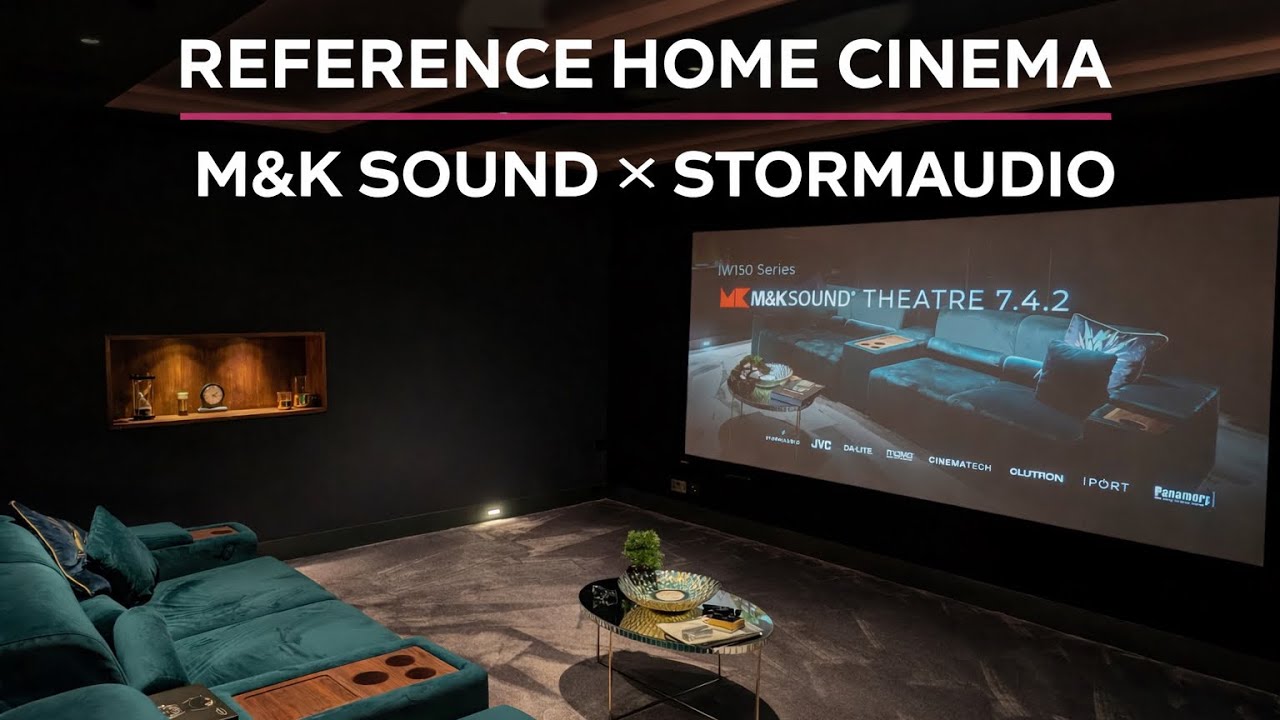
The Brief: A Double Garage, Completely Transformed
When a client offers a double garage for conversion, they're offering something most dedicated home cinema projects dream of: a structurally independent space with no immediate neighbours, generous footprint, and the freedom to build from a blank canvas.
This project — delivered at approximately £50,000 all-in — represents one of Zebra Home Cinema's earlier flagship builds, and it established the blueprint for the kind of complete integration projects the team has continued to refine. Dolby Atmos audio, Control4 automation, projector display, and a bespoke LED lighting system, all calibrated to work together as a single coherent experience.
The final sign that things were going well? Atif got distracted playing Call of Duty during commissioning.
"We've calibrated the speakers to make sure that the bass levels are correct and that all the surround speakers are working in sync — and then I went away to play a little bit of Call of Duty. It's all part of field testing. Very important."
The Technical Build
The project was delivered in collaboration with Kane from Virtus Integration, who handled the installation and commissioning of the technical systems. The division of responsibility — Atif overseeing the design and specification, Kane executing the installation — reflects how serious luxury home cinema projects are typically structured. System design and system installation are genuinely separate disciplines.
Audio: Calibration at 95%
The audio system was calibrated using Anthem ARC Genesis — Anthem's room correction software — running in parallel with manual dB meter measurements. Kane took SPL readings at one metre from each speaker individually, establishing baseline channel levels before running the software correction.
This dual approach — software measurement cross-checked against manual reference — is the professional standard. Software-only calibration trusts the measurement entirely. Manual cross-checking catches anomalies.
The results were notably good given the room was still being finished:
"Because of the room and the fact we've had complete control of the room design, they're pretty much spot on. The subs have come out exceptionally well — the response profile from the subs has been basically almost perfect. I would say almost perfect. Can't say perfect, but almost perfect."
The caveat on "almost" matters: the final calibration was to be performed again once all furniture, seating, and soft furnishings were in place, since every item in the room affects acoustic measurements. The commitment to re-calibrate rather than leaving the system "good enough" is characteristic of a properly managed installation.
Project Specification
| Element | Specification |
|---|---|
| Room type | Double garage conversion |
| Budget | ~£50,000 |
| Audio format | Dolby Atmos |
| Room correction | Anthem ARC Genesis (manual cross-check) |
| Automation | Control4 |
| LED system | Two-zone (high-level and low-level, multi-colour) |
| Projector setup | Calibrated (partial, pending final layout) |
| Gaming | Call of Duty (field testing) |
Control4: Scene Programming
The Control4 system was tuned during this commissioning visit to add meaningful intelligence to the room experience. Rather than requiring multiple button presses to configure a mood, the system was programmed with scenes — pre-set combinations of lighting colour, brightness, projector state, and audio settings — accessible with a single button press.
Entry switches at the door were configured as master on/off controls, so arriving at the room doesn't require navigating a menu. Pressing one button activates cinema mode. Pressing another configures ambient entertaining. The LED moods — including colour selection for the independently controlled high-level and low-level LED rings — are all adjustable within those scenes.
The scenes are fully customisable: once the client has lived with the room and developed preferences for colour temperatures and lighting levels, the Control4 programmer can adjust every parameter without any physical hardware changes.
The LED System: Layered Lighting
The lighting design distinguishes between two independent LED zones:
High-level LEDs — positioned along the upper perimeter of the room, providing general fill light for non-cinema use and ambient colour in cinema mode.
Low-level LEDs — a ring of lower-positioned LEDs providing accent lighting, independently controllable in both colour and intensity.
Both zones can produce most pastel and saturated colours. Having them on the same system but independently addressable means the room can simultaneously have a cool ambient fill at the top and a warm accent at kickboard level — or either switched off — depending on the scene.
This layering is what separates professional lighting design from simply "putting in some LEDs." The visual experience is created through the combination, not any single element.
Why the Budget Makes Sense
£50,000 for a home cinema conversion raises eyebrows in some contexts. In others, it represents exceptional value. The relevant comparison isn't a television and soundbar — it's a cinema-quality experience delivered in a private space, designed and calibrated by professionals, that can be used every day for decades.
The elements contributing to that cost in a project like this:
- ▪Structural conversion of the garage (insulation, acoustic isolation, flooring)
- ▪Professional AV rack installation and cable management
- ▪Dolby Atmos speaker array (multiple speakers, in-wall installation)
- ▪Control4 automation (processor, switches, programming)
- ▪Projector and screen (4K, acoustically transparent)
- ▪LED lighting system (dual-zone, multi-colour, automated)
- ▪Professional commissioning and calibration
Each element is a decision — not an expense. The calibration alone, performed properly twice (initial and final), is what converts a collection of equipment into a system.
Key Takeaways
- ▪Double garage conversions offer the best structural foundation for home cinema — acoustic independence and blank-canvas design freedom
- ▪Calibration should be done twice — initial install and again after all soft furnishings are placed
- ▪Control4 scenes should be configured for realistic use cases — not just "cinema mode" but the actual daily behaviour of the room
- ▪Manual SPL measurement cross-checks software calibration — professional standard is both, not either/or
- ▪Budget transparency matters — a ~£50K all-in number covers a known scope; scope creep is what creates surprises
FAQ: Double Garage Home Cinema Conversions
What does a £50K home cinema conversion include?
A £50,000 home cinema budget typically covers: structural conversion of the space (acoustic isolation, flooring, suspended ceiling), a full Dolby Atmos speaker system (8+ channels), projector and acoustically transparent screen, smart home automation (Control4 or equivalent), professional LED lighting design, AV rack installation, and professional commissioning and calibration. Exact scope varies with room size and specification level.
Why use Control4 in a home cinema?
Control4 provides a single, unified control interface for all systems in the room — audio, video, lighting, HVAC, window treatments — accessible from a touch panel, remote, or mobile app. Programmed scenes allow complex system states (cinema mode, gaming mode, entertaining mode) to be activated with one button. It also enables remote monitoring and remote diagnostics from the integrator.
What is Anthem ARC Genesis?
ARC Genesis is Anthem's room correction software, used in their AV processors and receivers. It uses acoustic measurements taken at multiple seating positions to calculate frequency, timing, and level corrections for each speaker channel. The result is a system calibrated for the specific acoustic characteristics of a particular room rather than assuming ideal conditions.
How long does a home cinema commissioning take?
Commissioning — which includes initial calibration, scene programming, final cable dressing, and testing — typically takes one to two days for a system of this complexity. A final calibration session is then scheduled once all furnishings are in place, typically one to two weeks after the initial build is complete.
Is Dolby Atmos worth the investment for a garage cinema?
For a dedicated cinema build, Dolby Atmos is the standard — not an upgrade. Modern film soundtracks are mixed in Atmos by default. Installing a system without height speakers means the overhead audio layer of every Atmos-encoded film is either absent or synthesised. For a project budgeted at this level, installing a system that can't play back content as it was mixed would be a fundamental compromise.
Frequently Asked Questions
What does a £50K double-garage cinema include?
At this budget, a properly-executed double-garage cinema typically includes acoustic isolation, a full Dolby Atmos system (usually 7.2.4 or 9.2.4), a calibrated laser projector with an acoustically-transparent screen, motorised seating, and full Control4 integration with single-press scene recall. The £50K covers structural work, equipment, seating, and integration but does not include major external structural work to the garage shell.
What is Control4 doing in this build?
Control4 unifies every controllable element of the room into a single user interface — projector and screen control, immersive audio processor selection, lighting scenes, seating positions, HVAC, blinds (if present), and source selection. The point is that the user touches one button to start a film, and the room configures itself; second button to pause; third to leave.
How does Dolby Atmos work in a converted garage?
The four overhead speakers are installed in the ceiling cavity, fired downward into the listening area. Bed-level speakers sit at ear height around the seating tier. The garage's structural walls help with isolation, and the acoustic treatment on the walls and ceiling controls reflections that would otherwise blur the spatial precision of the Atmos mix.
Is hidden AV worth it?
For most clients at this price point, yes. Hidden AV — speakers behind acoustically-transparent screens, in-wall in-ceiling drivers, projection mounted out of sight, equipment racked in an adjacent service space — produces a finished room that doesn't look like a cinema until the screen comes down. For day-to-day living in a multi-purpose space, that's often the difference between a room that gets used and one that doesn't.