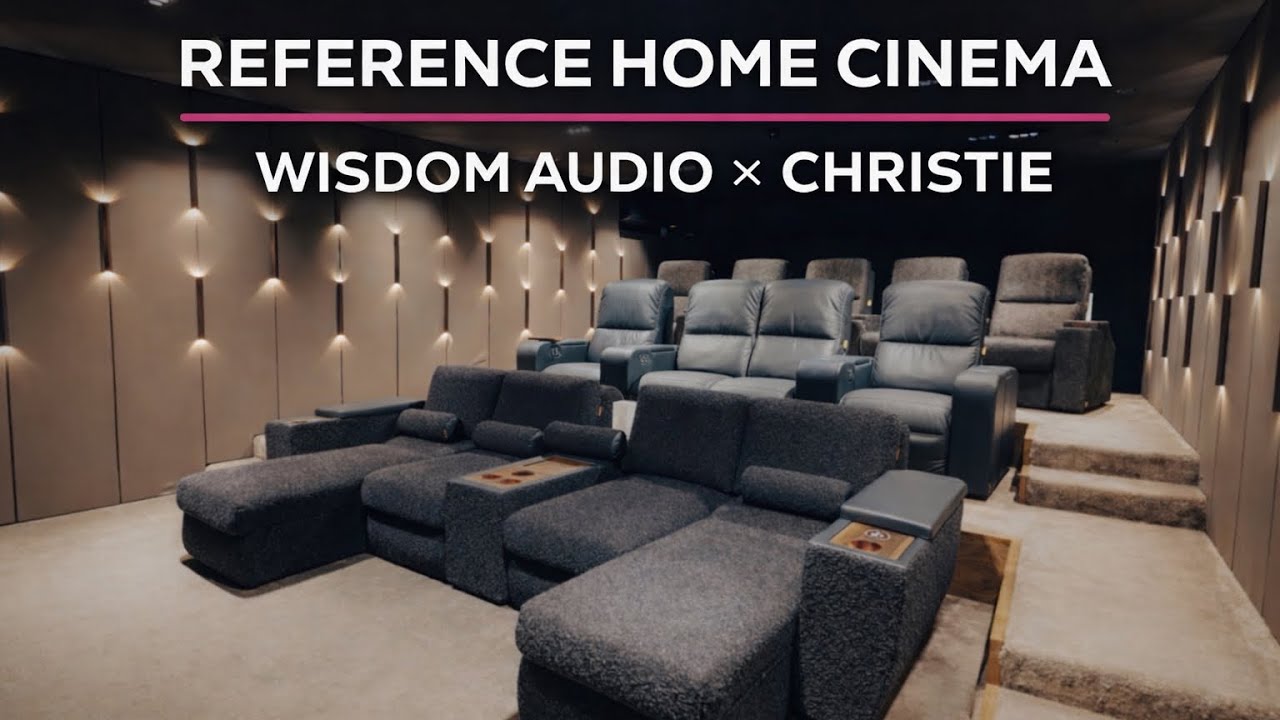
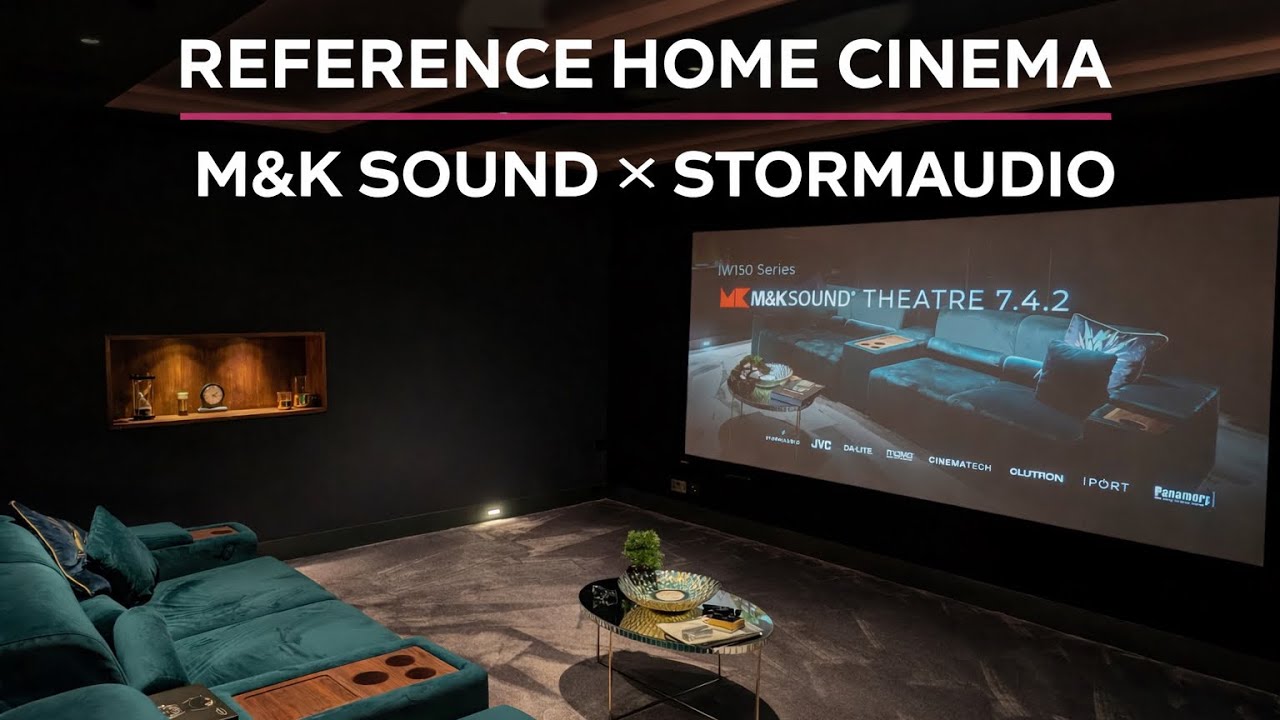
Before the star ceiling goes in. Before the reclining seats arrive. Before the first movie plays. This is Project Moonstone at the start — a basement space in the Cotswolds, undergoing a complete transformation from a 2008-era cinema install into a reference-grade Zebra Home Cinema demo facility. Arthur's New Year teaser gives a rare inside look at how a serious dedicated cinema is planned, before the build begins.
The Space: A Cotswolds Basement with History
The room has a past. This basement in the Cotswolds countryside was previously a Zebra Home Cinema installation from 2008 — the original spec included a Sony VPL-VW100 1080p projector, a 120-inch non-acoustically transparent screen, and M&K speakers in wall recesses. More than a decade on, the technology has moved on considerably. The room is being stripped back and rebuilt for the current era.
"We wanted to firstly uplift all the equipment to the latest technologies, but also sort the room out."
The space is seven metres wide with an acoustic ceiling (gypsum acoustic platform). The challenge: it is a square room — acoustically one of the most difficult configurations for cinema. A square room creates identical parallel surfaces on all axes, producing standing waves and bass resonance that a rectangular room would not. The acoustic analysis fed directly into the speaker and subwoofer placement decisions.
The Technical Specification: What's Going In
Audio System: M&K with Atmos Configuration
The audio architecture is a full M&K in-wall and on-wall system in a 7.2.4 Atmos configuration:
| Channel | Speaker Model | Placement |
|---|---|---|
| Front L/C/R (3 channels) | M&K MP150 | In-wall recess at screen |
| Surround Left/Right (2 channels) | M&K IW950 | In-wall, flush mounted |
| Rear Surround (2 channels) | M&K MP950 | On-wall (false wall not viable) |
| Atmos Height (4 channels) | M&K IC95 | In-ceiling |
| Subwoofer 1 | M&K IW28S | Front right in-wall |
| Subwoofer 2 | M&K IW28S | Rear left in-wall |
The subwoofer placement — front right and rear left, diagonally opposite corners — was determined by acoustic analysis of the square room. In a square room, placing subs in opposing corners creates more even bass distribution, counteracting the standing wave problem that would arise from placing both subs at the front.
"When we did an acoustic analysis of the room, because it's a square room, it worked out better from a calculation to put one sub front right and one sub rear left."
Projection System
The primary projector is the Sony VPL-VW590 — Sony's true 4K entry-point laser projector, replacing the original 1080p Sony from 2008. The screen is a 158-inch 16:9 format, nearly filling the full width of the seven-metre space.
The room also serves as a projector test and comparison facility. A secondary projector staging area is being built at the rear of the room specifically for side-by-side shootoffs:
- ▪Sony VPL-VW590 vs. Epson TW9400
- ▪Sony vs. JVC (to be confirmed)
- ▪Fixed permanent mount vs. mobile staging setup
"We're going to have a stage here for a second projector — for example, a shootoff with an Epson TW9400 to compare with Sony. What is the difference? That's what this room is for."
This kind of objective comparison infrastructure is rare in UK home cinema demonstration facilities and makes Project Moonstone genuinely valuable for anyone in the research phase of a purchase decision.
Processing and Control
- ▪Processing: M&K MP7 processor (to be configured)
- ▪Control: Full lighting control and AV system control — specific platform TBC
- ▪Acoustic treatment: Crushed velvet wall panels to cover existing hard surfaces, eliminating first-reflections and improving mid/high frequency response
The crushed velvet treatment serves both aesthetic and acoustic functions — visually upgrading the space while absorbing the parallel wall reflections that would otherwise smear the stereo image.
The Room-Within-a-Room Acoustic Challenge
The square room geometry is the central acoustic challenge of this build. Standard rectangular rooms have different dimension ratios on each axis (width, height, depth), which means standing waves occur at different frequencies and can be managed individually. A square room has identical width and depth, causing standing waves to stack at the same frequencies — a much harder problem.
The solution is a combination of:
- 1.Diagonal subwoofer placement (front right / rear left) — distributes bass energy more evenly
- 2.In-wall subwoofers — allows precise positioning without floor-space constraints
- 3.Acoustic treatment on all surfaces — absorbs the problematic reflections that parallel walls generate
- 4.Carpet flooring — adds additional mid/low frequency absorption to the floor-ceiling pair
The Aspiration: What's Coming Later
The initial build focuses on processing, speakers, and projector. Several elements are planned for future phases:
| Feature | Status |
|---|---|
| Electric masking screen (aspect ratio switching) | Future phase |
| Steinway Lyngdorf speakers (demo rotation) | Planned |
| Lyngdorf MP7 processing | To be confirmed |
| Additional seating configuration | Initial sofa, cinema seating later |
"We're going to show and demonstrate some of the range of speakers that we offer — from Lyngdorf, Steinway potentially — that's moving forward in the future."
The room is designed to function not just as a showcase but as a working test facility where different brands and configurations can be evaluated and compared honestly.
Key Takeaways
- ▪Project Moonstone is a complete rebuild of a 2008-era Zebra Home Cinema basement installation in the Cotswolds, being developed into a reference-grade demo facility
- ▪The square room geometry required acoustic analysis to determine subwoofer placement — diagonal corners (front right / rear left) for even bass distribution
- ▪Audio: M&K 7.2.4 Atmos system — MP150 front, IW950 in-wall surrounds, MP950 rear, IC95 in-ceiling Atmos, dual IW28S in-wall subwoofers
- ▪Projection: Sony VPL-VW590 (true 4K) with a 158-inch 16:9 screen
- ▪Projector shootoff facility planned — side-by-side comparison staging for Sony vs. Epson vs. JVC
- ▪Crushed velvet wall treatment for acoustic and aesthetic upgrade
- ▪Future plans include electric masking screen and Steinway Lyngdorf speaker integration
Frequently Asked Questions
What is Project Moonstone?
Project Moonstone is a Zebra Home Cinema dedicated cinema installation project located in the Cotswolds, UK. Originally installed by Zebra in 2008 with 1080p Sony projection and M&K speakers, the room is being completely rebuilt in 2023 with current 4K Sony laser projection, a full M&K Dolby Atmos 7.2.4 speaker system, and professional acoustic treatment. It also serves as a demo and projector comparison facility.
Why are the subwoofers placed diagonally in Project Moonstone?
The basement room is a square — identical width and depth. Square rooms produce stacked standing waves at the same frequencies on both the left-right and front-rear axes, making even bass distribution particularly challenging. Acoustic analysis determined that placing the two M&K IW28S in-wall subwoofers in diagonally opposite corners (front right and rear left) distributes bass energy more evenly throughout the room, reducing the severity of the resonant modes.
What projector is used in Project Moonstone?
The primary projector is the Sony VPL-VW590 — Sony's entry-level native 4K laser projector. The room is also set up with a second projector staging area at the rear for direct comparison shootoffs between different models (Sony, Epson TW9400, JVC). This makes the facility useful not just as a demo room but as a genuine evaluation environment for clients in the research phase.
What is an M&K 7.2.4 speaker configuration?
A 7.2.4 Dolby Atmos configuration consists of: 7 bed channels (3 front LCR, 2 side surrounds, 2 rear surrounds), 2 subwoofers (the ".2"), and 4 overhead Atmos channels (the ".4"). In Project Moonstone, this means M&K MP150 front speakers, IW950 in-wall sides, MP950 rear on-wall speakers, four IC95 in-ceiling Atmos speakers, and two IW28S in-wall subwoofers.
How long does it take to build a dedicated home cinema?
The Project Moonstone rebuild — stripping the existing installation, acoustic analysis, speaker repositioning, new projection system, carpeting, and wall treatment — was expected to take several weeks of active work. The full build process for a new-build dedicated cinema from shell to completion typically takes 8–16 weeks depending on specification complexity, acoustic treatment requirements, and whether seating and additional elements are included in the initial phase.