From Garage to Flagship: The Project Overview
Not every home cinema starts with a perfect room. Some of the most compelling projects Zebra Home Cinema has completed began with a blank, structural challenge — and this one began with a garage.
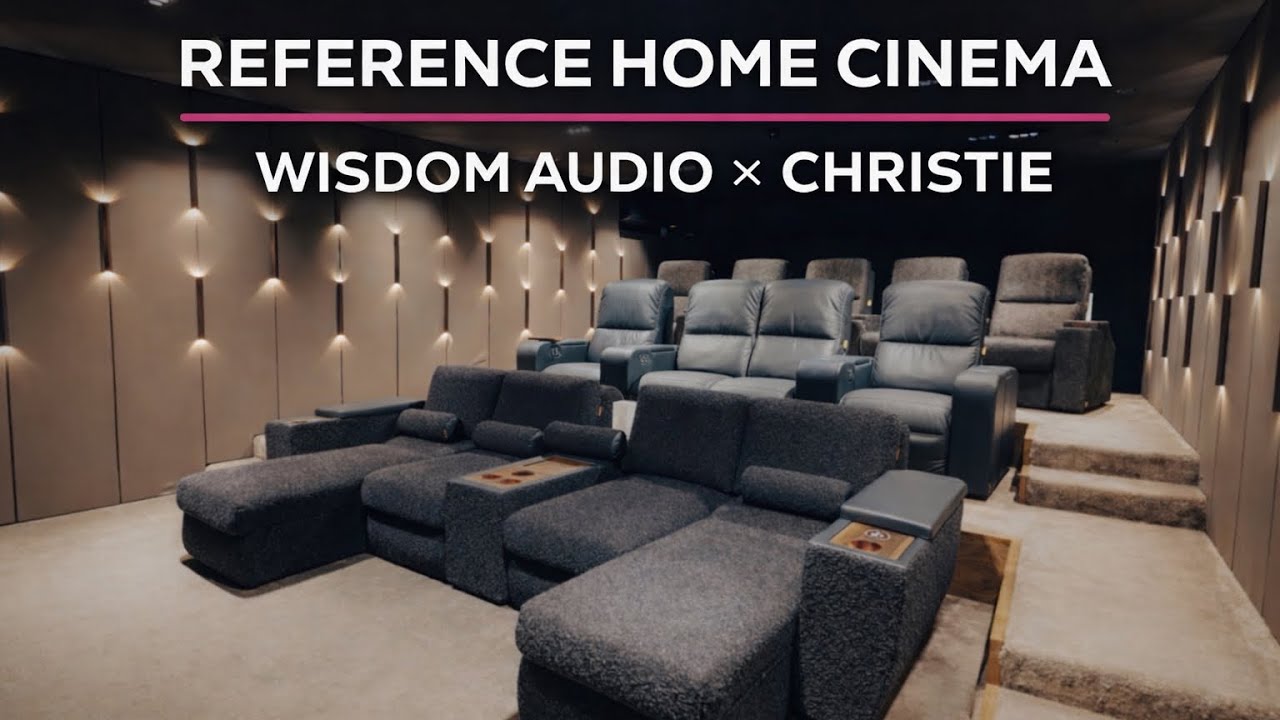
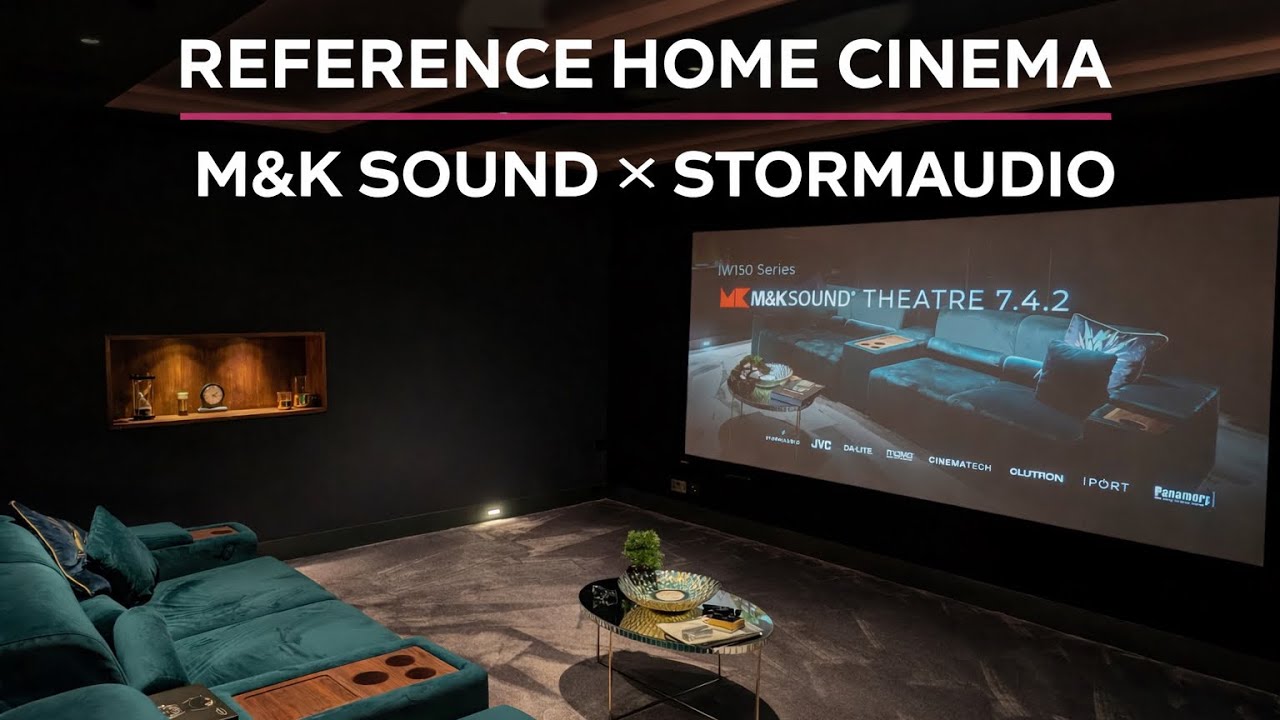
What Atif and the team delivered here is one of their flagship projects: a Dolby Atmos home cinema built within a converted garage, with two-tier seating, a bar, a floor-to-ceiling screen, and every element of the construction — acoustic panels, star ceiling, LED lighting — integrated as a single coherent experience.
"As you walk in here, you can tell your voice has changed already — just because of the way the room has been constructed."
That acoustic quality — immediately perceptible before a single frame has played — is the result of deliberate construction choices, not coincidence.
Construction: Acoustic Treatment Built Into the Architecture
The moment you enter the room, the sound of the space changes. This isn't a side effect — it's engineered. The walls are lined with custom fabric acoustic panels that absorb early reflections, preventing the parallel hard surfaces of a converted garage from creating the flutter echoes and comb filtering that destroy dialogue clarity and bass definition.
Crucially, these panels serve a second function: they conceal the surround speaker array. There are no visible speaker grilles breaking the aesthetic of the room. The sound appears to come from nowhere — and everywhere.
The panels are divided by colour-changing LED strips, giving the room a lighting system that can shift between cinema mode, ambient entertaining, and everything in between — all controlled from a smartphone.
The Star Ceiling
Fibre optic star ceilings are one of the most requested finishing elements in premium home cinema builds, and for good reason: they transform the ceiling from a surface into an immersive visual environment. This installation uses Starscape fibre optics — pre-threaded, precisely placed, and controllable.
The effect is architectural, not decorative. In a properly darkened cinema room, the ceiling becomes the night sky. It reinforces the separation from the everyday home environment that makes the cinema experience feel genuinely special.
System Specification
| Component | Specification |
|---|---|
| Screen | Floor-to-ceiling, approximately 3.5m wide |
| Projector | Sony 4K laser projector |
| Front L/C/R | M&K In-Wall 150 speakers |
| Subwoofers | Pair of M&K C15 custom in-wall subs |
| Surround speakers | M&K in-wall and in-ceiling array |
| Audio format | Dolby Atmos |
| Seating | Two-tier, with bar area |
| Lighting | Colour-changing LED (smartphone-controlled) |
| Acoustic treatment | Custom fabric wall panels + carpets |
The Screen and Projector: Sizing for a Two-Tier Room
Getting a floor-to-ceiling screen right in a two-tier cinema requires calculation, not guesswork. The viewing angle from the rear elevated row must work just as well as the front row — nobody should be looking up at an uncomfortable angle, and nobody in the front row should have their view blocked by heads in the second row.
The Sony 4K laser projector chosen for this installation is selected for a specific reason beyond picture quality: laser light engines turn on instantly and maintain consistent brightness over their lifetime without the colour shift that affects lamp-based projectors. At 4K resolution with good black levels, the image serves both film and gaming content equally well.
The floor-to-ceiling aspect ratio is significant: content mastered in IMAX Enhanced (available on Disney+) expands to fill the full screen height, creating a substantially different and more immersive image than the letterboxed 2.39:1 framing of widescreen cinema.
The Audio System: M&K and Dolby Atmos
The front soundstage is anchored by M&K In-Wall 150 speakers for the left, centre, and right channels — flush with the wall behind the screen, invisible until the projector illuminates the space in front of them. The centre channel, carrying the majority of film dialogue, is precisely aligned with the screen centre.
For bass, a pair of M&K C15 custom subwoofers are positioned in the room. The placement isn't arbitrary — it's calculated using acoustic measurement to find the positions that produce the smoothest bass response at every seating location in both tiers.
"For a room of this size, the bass management is really important. You need subwoofers which are big enough to get those deep resonances going on in your body when you're watching the film."
Dolby Atmos height information is delivered by in-ceiling speakers — creating the overhead sound field that separates a true Atmos installation from a conventional surround system. When a helicopter passes overhead in a film, it passes overhead in the room.
Key Takeaways: What Makes a Garage Conversion Work
- ▪Acoustic treatment must be designed in, not added later — fabric panels, carpets, and upholstered seating all contribute to the room's acoustic character
- ▪Speaker concealment is achievable without compromise — M&K in-wall and in-ceiling speakers disappear into the architecture while performing at reference level
- ▪Two-tier seating requires careful geometric planning — screen size, viewing distance, and seat height must be calculated for both rows
- ▪A bar isn't an extravagance — in an entertainment space that doubles as a social room, the bar anchors the hosting experience
FAQ: Garage Home Cinema Conversions
Can a garage be converted into a high-quality home cinema?
Yes — and garage conversions are among the most successful home cinema projects because garages offer structural advantages: they're typically detached or semi-detached from the main house (reducing sound transmission), offer clear spans without intermediate columns, and can be built out to a specification that a room within the main house often cannot achieve without major disruption.
What acoustic treatment is needed for a garage cinema?
The key elements are: fabric acoustic panels on the walls to control early reflections and standing waves, soft furnishings (carpets, upholstered seating) to add broadband absorption, and in some cases bass traps in corners to control low-frequency modes. The goal is a controlled acoustic environment — not a dead room, but one without the flutter echoes of a bare-walled space.
What projector technology is best for home cinema?
Laser projectors have become the preferred choice for new installations. They offer instant-on operation, consistent brightness throughout their lifespan (no lamp degradation), and excellent black levels. Sony's 4K laser projectors are a common choice at the premium level, offering native 4K resolution with high contrast ratios.
How is a Dolby Atmos system different from regular surround sound?
Dolby Atmos adds a height dimension to the conventional 5.1 or 7.1 surround speaker layout. In-ceiling or up-firing speakers create an overhead sound field, meaning effects can be placed and moved anywhere in three-dimensional space — including directly above the listener. This is how a Dolby Atmos cinema installation reproduces the spatial audio design the film's mixing team intended.
How do I plan the seating layout for a two-tier home cinema?
The key variables are: screen height, screen width, front-row viewing distance, and the elevation of the second tier. Each row must have unobstructed sightlines to the full screen, comfortable vertical viewing angles (typically no more than 15° from horizontal), and enough distance from the screen to perceive the full image without excessive head movement. A specialist can model this geometrically before any construction begins.
Frequently Asked Questions
What makes a garage suitable for a cinema conversion?
The four practical factors are ceiling height, structural insulation potential, electrical capacity, and the ability to acoustically isolate the space from the rest of the house. Most attached residential garages can be converted, but external-facing garages on busy roads or under bedrooms usually need significantly more isolation work.
What's the typical timeline for a garage-to-cinema conversion?
Three to five months from first design conversation to final calibration is standard. The cinema-specific part of the build (acoustic treatment, screen, projection, speaker installation, calibration) usually takes four to six weeks; the rest is structural and finishing work shared with any garage conversion.
What should I budget for a garage home cinema?
UK conversions typically run £40,000–£150,000 depending on size, equipment level, seating, and the starting condition of the space. The room build often accounts for 40–50% of the total, with equipment, seating, and integration making up the rest.