Exclusive Interviews
Hans Zimmer Live
The musicians, engineers, and technology behind one of the most spectacular touring shows in the world — and what it means for home audio.
Hans Zimmer Live is not a normal concert. It is a full-scale orchestral and electronic production featuring dozens of musicians performing Zimmer's film scores — from Gladiator and Inception to Interstellar and The Dark Knight — with a visual production design that rivals the films themselves. We have spent the past two years interviewing members of Zimmer's touring crew: the front-of-house sound engineer, percussionists, drummer, lighting designer, bass player, and wind instrumentalist.
These conversations were not about celebrity gossip. They were about craft — how professional musicians and engineers think about sound, how they experience audio technology, and what happens when world-class performers encounter reference-level home audio for the first time. If you want to understand how film scores and movie audio are actually made, start there. Several of these artists visited our demonstration suites and experienced Steinway Lyngdorf systems. Their reactions were unscripted and telling.
What follows is a guide to each interview, what we learned, and why it matters if you care about hearing music and film soundtracks the way they were meant to be heard.
Front of House Engineer
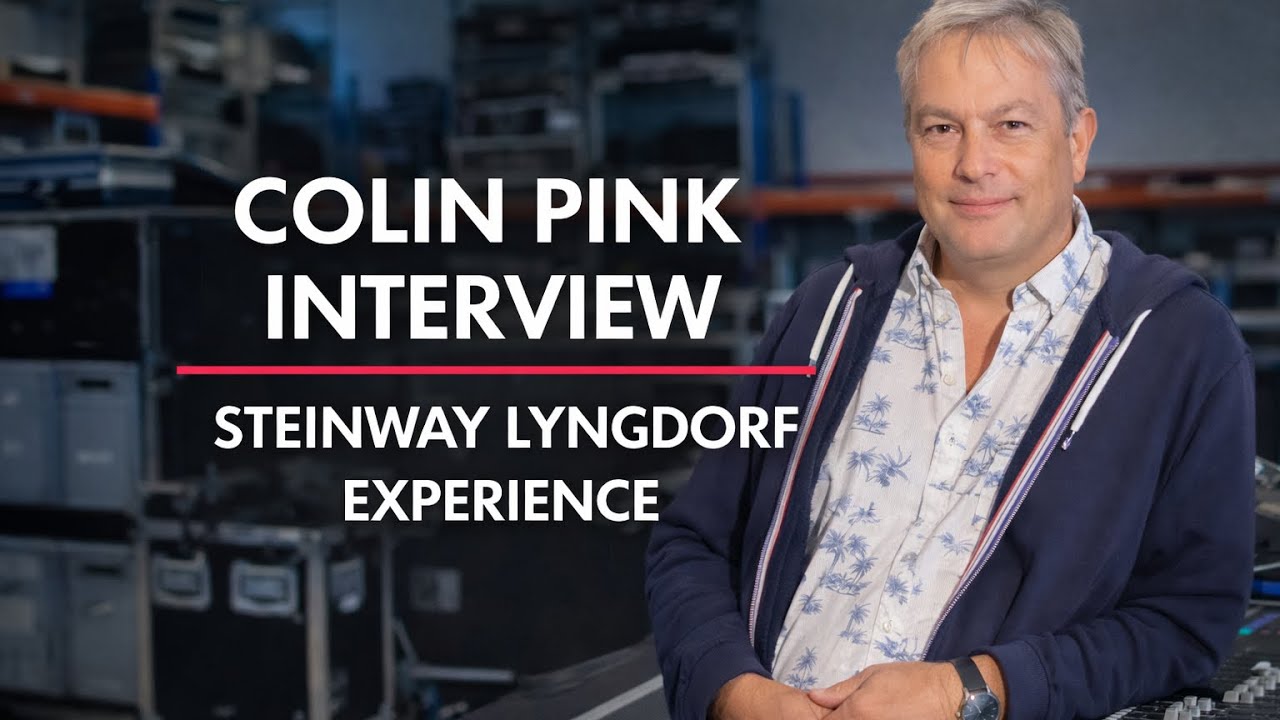
Colin Pink — The Man Behind the Mix
Colin Pink is the front-of-house engineer for Hans Zimmer Live. His job is to take the output of every musician on stage — dozens of individual channels — and deliver a coherent, balanced, emotionally powerful mix to an arena of 15,000 people. It is one of the most technically demanding roles in live sound, and Pink has been doing it at the highest level for years.
In our interview, Pink discussed the challenges of mixing orchestral, electronic, and cinematic music in venues that were never designed for acoustic performance. He explained how the touring system's line array speakers are configured differently in every city based on venue geometry, and how he manages the fundamental tension between raw power and tonal accuracy at concert volumes.
We also brought Pink into a Steinway Lyngdorf listening environment, and his reaction was remarkable. Here is a man who spends his professional life managing audio at massive scale, hearing intimate, perfectly calibrated stereo playback in a treated room. The contrast between arena acoustics and reference home audio gave him a perspective that most FOH engineers never get to articulate.
Read the full Colin Pink interview →"In an arena, you fight the room. In here, the room works with you. That's the difference. The detail I can hear in this space — I'd need a silent, empty venue to get close to this on tour."
— Colin Pink, FOH Engineer, Hans Zimmer Live
Percussionist
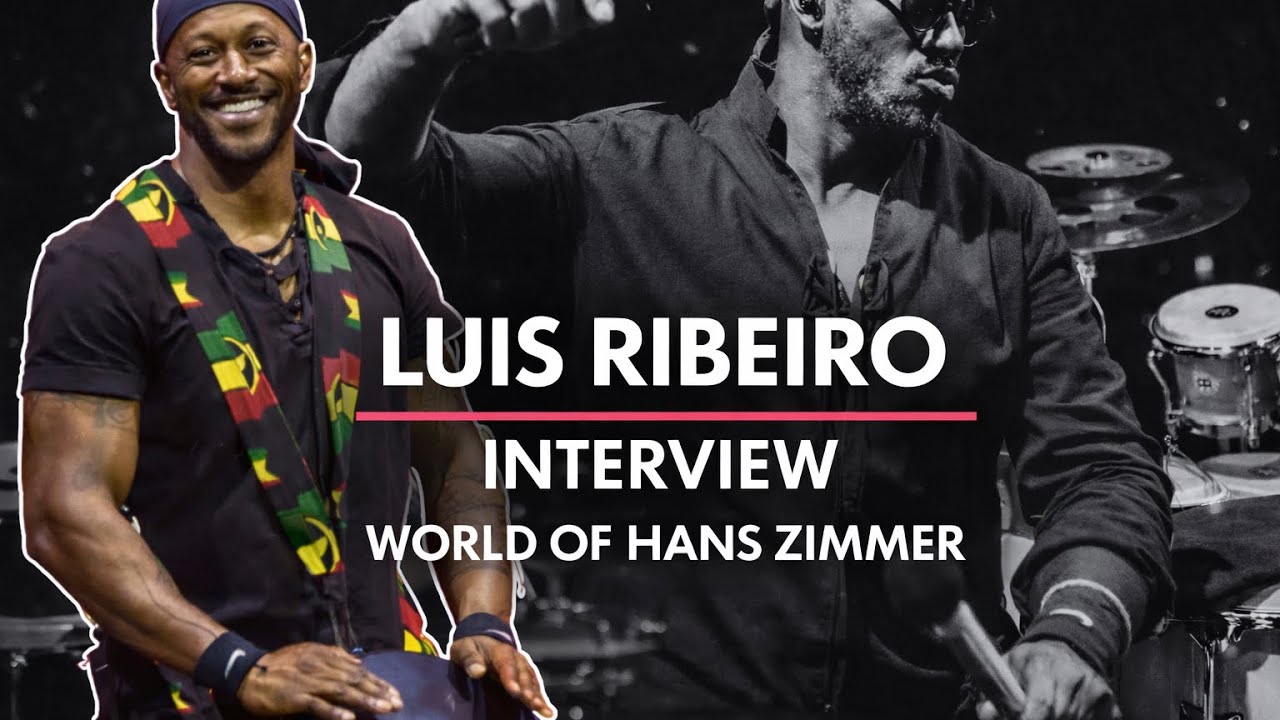
Luis Ribeiro — Rhythm, Film Music, and Well-Being
Luis Ribeiro is a percussionist with the World of Hans Zimmer touring production. His musical background spans classical, jazz, and world percussion — a versatility that Zimmer's film scores demand. In our conversation, Ribeiro discussed the physicality of his role, how percussion supports emotional storytelling in film music, and the connection between rhythmic expression and mental well-being.
Ribeiro's perspective on how percussive sounds are processed in film scores was particularly illuminating. The percussion you hear in an Inception or Interstellar sequence is not simply a drum hit — it is a layered construction of impact, resonance, room character, and electronic processing. Understanding this helps home cinema owners appreciate why their subwoofer and surround system need to be precisely calibrated to reproduce these textures faithfully.
Read the full Luis Ribeiro interview →Drummer
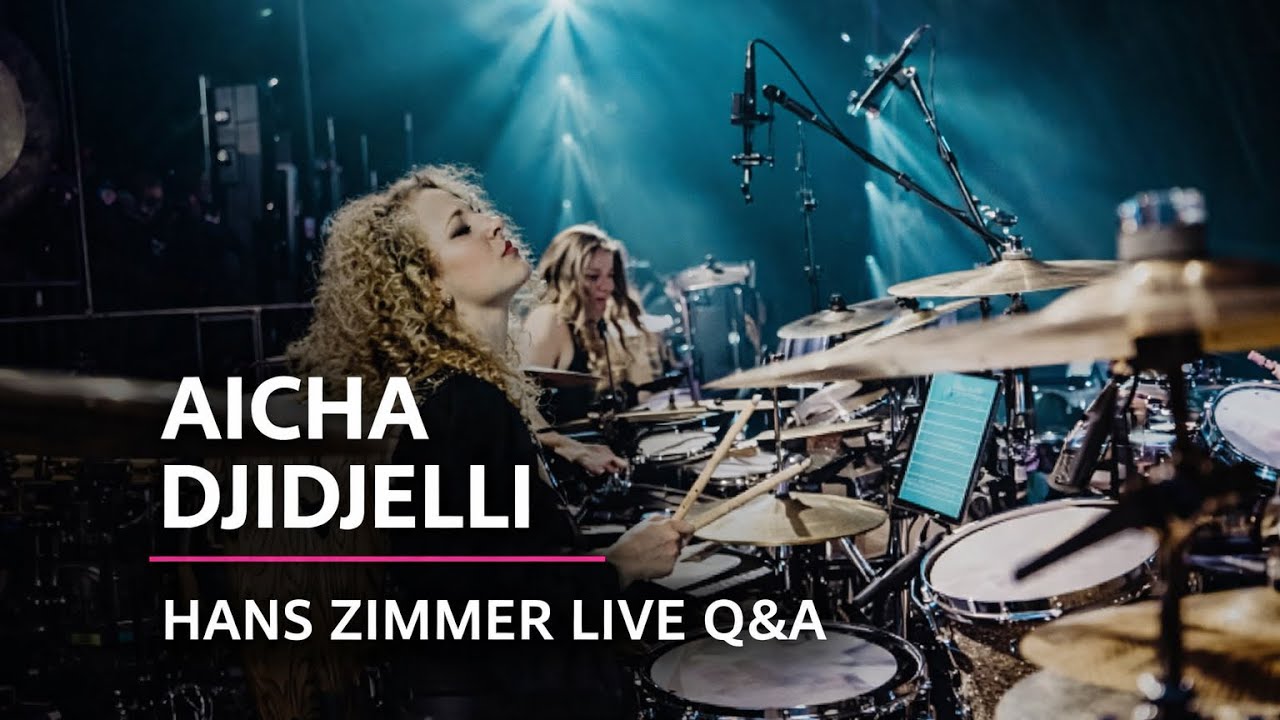
Aicha Djidjelli — Power, Precision, and Steinway Lyngdorf
Aicha Djidjelli is the drummer for Hans Zimmer Live, and she is one of the most powerful stage presences in the touring ensemble. Her playing drives some of the most intense moments in the show — the building tension of The Dark Knight sequences, the relentless energy of Pirates of the Caribbean. In our interview, she spoke about the discipline required to serve the composition rather than dominate it, and how Hans Zimmer's arrangements give every musician space to express themselves within a tightly structured whole.
We also captured her reaction to hearing Steinway Lyngdorf playback for the first time. For a drummer — someone who lives in the transient, percussive world of impact and decay — the accuracy of the Steinway system was immediately apparent. She commented on how clearly she could hear the room of the recording, the resonance of the drum shells, and the micro-detail that normally gets lost in live monitoring.
Read the full Aicha Djidjelli interview →Percussionist
Aleksandra Suklar — Classical Meets Cinematic
Aleksandra Suklar brings a classical percussion background to Hans Zimmer Live. Her training in orchestral percussion — timpani, marimba, vibraphone, and auxiliary instruments — gives her a different tonal perspective from rock and pop drummers. In our conversation, she discussed the challenge of blending classical percussive technique with the electronic and cinematic demands of Zimmer's compositions.
For home cinema owners, Suklar's insights are valuable because they illuminate how much tonal variety percussion actually contains. A timpani roll has completely different frequency content, decay characteristics, and spatial behaviour from an electronic kick drum or a orchestral bass drum. If your system compresses all of these into the same boomy low-end, you are hearing a fraction of what the mix actually contains.
Read the full Aleksandra Suklar interview →Wind Instrumentalist
Pedro Eustache — Master of Film Music Winds
Pedro Eustache is one of the most recorded wind instrumentalists in film music history. His credits include The Lord of the Rings, Avatar, The Dark Knight, Man of Steel, and dozens of other major scores. He plays hundreds of wind instruments from traditions spanning every continent, and his ability to shift between ancient and modern tonalities is a significant part of why Hans Zimmer's scores have such a distinctive, global sound.
In our interview, Eustache spoke about the relationship between breath, instrument, and recorded sound. He explained how the microphone placement for a duduk (an Armenian double-reed instrument) is completely different from a concert flute, and how the recording engineer's choices determine whether the final playback captures the living, breathing quality of the instrument or reduces it to a flat, lifeless tone.
Read the full Pedro Eustache interview →"A wind instrument is an extension of the body. When you hear it reproduced with complete accuracy, you feel the breath. That connection is either there or it is not. No amount of processing can fake it."
— Pedro Eustache, Wind Instrumentalist
Lighting Designer
John Featherstone — Lightswitch & the Visual Experience
John Featherstone is from Lightswitch, the lighting design firm responsible for the visual production of Hans Zimmer Live. While lighting is not audio, his perspective matters deeply for home cinema because it addresses the same fundamental question: how do you create an immersive emotional experience in a controlled environment?
Featherstone discussed how lighting design in a concert setting is synchronized to the music — not reactively, but structurally. Lighting cues are built into the composition, not bolted on afterwards. This is the same principle that drives great home cinema design: the technology should serve the content, not the other way around. A star ceiling that looks impressive but adds nothing to the viewing experience is the home cinema equivalent of concert lighting that ignores the music.
Read the full John Featherstone interview →Bass Guitarist
Yolanda Charles MBE — Bass, Hans Zimmer, and Steinway Lyngdorf
Yolanda Charles MBE is one of the most respected bass guitarists in the world, with credits spanning from Hans Zimmer's touring band to Paul McCartney, Robbie Williams, and The BBC Concert Orchestra. She was awarded an MBE for services to music. In our interview, she discussed her approach to bass as a foundational instrument, how she supports the orchestral and electronic elements in Zimmer's live ensemble, and the physical, bodily experience of low-frequency sound.
We also filmed Yolanda's experience hearing Steinway Lyngdorf speakers for the first time. Her reaction — as a musician who has spent decades listening to her own bass through stage monitors, headphones, and studio playback — was striking. She described the Steinway Lyngdorf reproduction as the first time she had heard her own instrument with no colouration, no distortion, and no missing detail. For a bassist, low-frequency accuracy is everything, and her endorsement carries genuine weight.
Read the full Yolanda Charles MBE interview →The Steinway Lyngdorf Connection
A recurring thread across these interviews is the Steinway Lyngdorf listening experience. Several of these artists — Colin Pink, Aicha Djidjelli, Yolanda Charles, and others — experienced Steinway Lyngdorf's reference audio systems during their visits. Without exception, their reactions confirmed something we have observed repeatedly: professional musicians hear things in Steinway Lyngdorf playback that they do not hear on other systems.
This is not marketing. It is acoustics. Steinway Lyngdorf's fully digital signal path and RoomPerfect calibration technology eliminates the colouration that most speakers introduce. When a drummer hears her own recordings and comments on cymbal decay she has never noticed, or a bassist identifies harmonics in her own playing that she could not hear on studio monitors — that is the system revealing detail that was always in the recording but was being masked by equipment limitations or room acoustics.
| Artist | Role | Steinway Lyngdorf Experience |
|---|---|---|
| Colin Pink | FOH Engineer | Compared reference room detail to silent arena conditions |
| Aicha Djidjelli | Drummer | Identified transient detail absent from stage monitoring |
| Yolanda Charles MBE | Bass Guitarist | First time hearing own bass without colouration |
| Pedro Eustache | Wind Instrumentalist | Described breath and body connection in playback |
If the people who make the music are hearing things they have never heard before, that tells you something about the system. You can read more about Steinway Lyngdorf's full product range in our complete buyer's guide.
Frequently Asked Questions
What speakers does Hans Zimmer use?
Hans Zimmer has a long-standing relationship with Steinway Lyngdorf, using their speakers in his personal studio. On tour, the front-of-house system varies by venue and is typically a large-format line array from manufacturers like L-Acoustics or d&b audiotechnik. But Zimmer's FOH engineer Colin Pink has discussed his experience with Steinway Lyngdorf's reference audio and how it compares to the best touring PA systems.
Can you hear Hans Zimmer quality audio at home?
Yes. A properly specified home cinema with reference speakers, acoustic treatment, and room correction can reproduce the full dynamic range and spatial detail of Zimmer's compositions. In fact, a well-calibrated home room can exceed what you hear at a live concert, because you eliminate arena acoustics, crowd noise, and the compromises of PA distribution. Systems from Steinway Lyngdorf, M&K Sound, or Wisdom Audio paired with proper room treatment deliver this.
What is Steinway Lyngdorf?
Steinway Lyngdorf is a partnership between Steinway & Sons (the 170-year-old piano manufacturer) and Peter Lyngdorf (a Danish audio engineer and inventor). They produce reference-level loudspeakers and fully digital audio systems with proprietary RoomPerfect room correction technology. Their products range from the compact S-15 to the flagship LS Concert series, and are found in private cinemas, recording studios, and the homes of professional musicians worldwide.
Who plays in Hans Zimmer's live band?
Hans Zimmer's touring ensemble includes dozens of musicians covering orchestral strings, brass, percussion, electronic instruments, guitars, bass, and vocals. We have personally interviewed percussionists Luis Ribeiro and Aleksandra Suklar, drummer Aicha Djidjelli, wind instrumentalist Pedro Eustache, bassist Yolanda Charles MBE, FOH engineer Colin Pink, and lighting designer John Featherstone. Each brought a unique perspective on how Zimmer's music is built and performed.
How does live concert sound compare to home cinema?
Live concert sound and home cinema are fundamentally different disciplines. Concert sound must fill enormous spaces with thousands of listeners at different distances and angles. Home cinema has the advantage of a controlled, small room where every seat can be optimised. In a well-designed home cinema, you can achieve a level of clarity, imaging, and bass precision that no arena concert can match — you hear the music as the engineer mixed it, not as the venue distorted it.
Why do professional musicians react strongly to Steinway Lyngdorf speakers?
Professional musicians spend their lives listening critically. Most consumer audio systems colour the sound with boosted bass, scooped midrange, or exaggerated treble. Steinway Lyngdorf systems with RoomPerfect calibration reproduce music with virtually no colouration. Musicians hear their own instruments reproduced with an accuracy they rarely experience outside a recording studio, which is why their reactions tend to be visceral and immediate.
The next step
Want to hear what these musicians heard?
We can specify a system that reproduces music and film scores with the accuracy that professional musicians demand. The first step is a conversation.
Book a Conversation