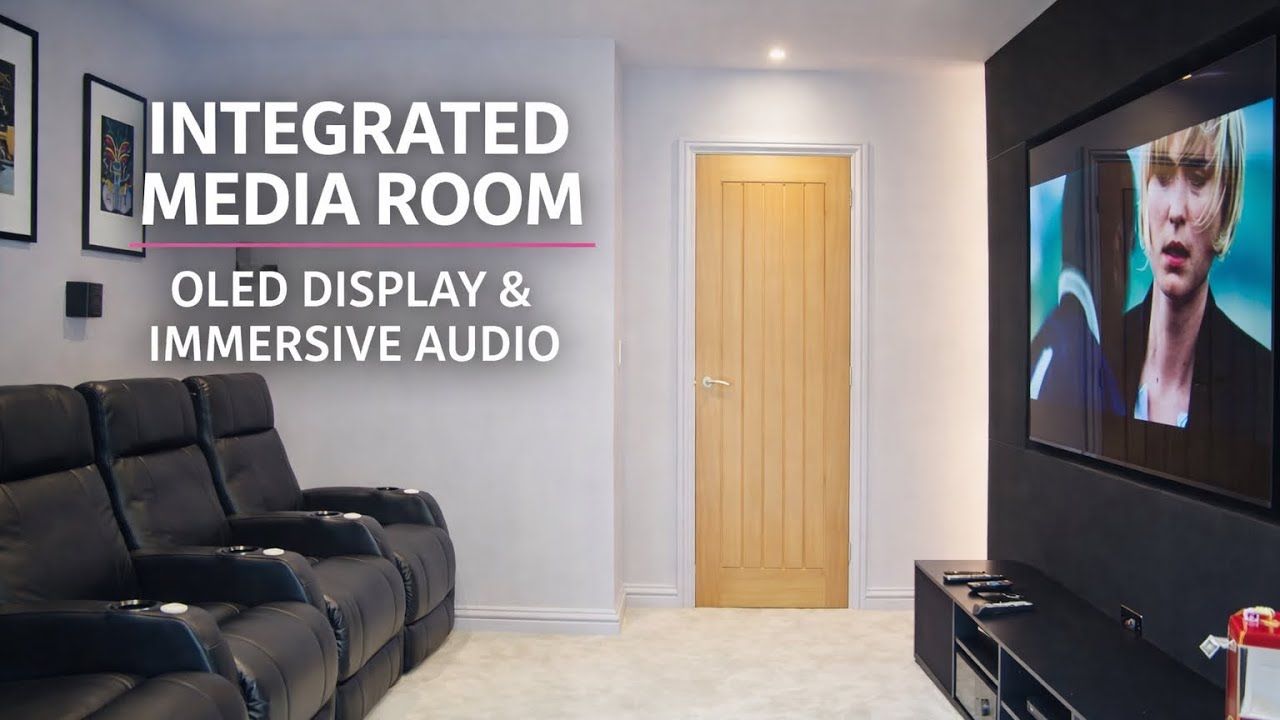
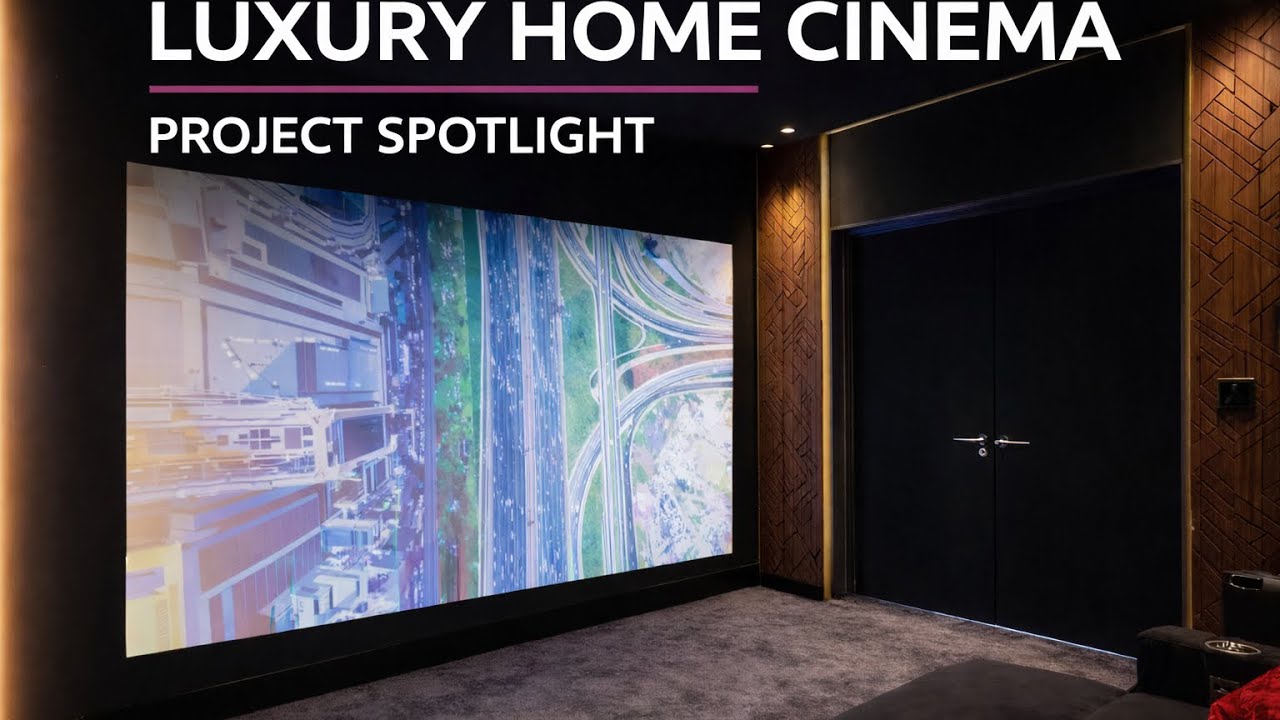
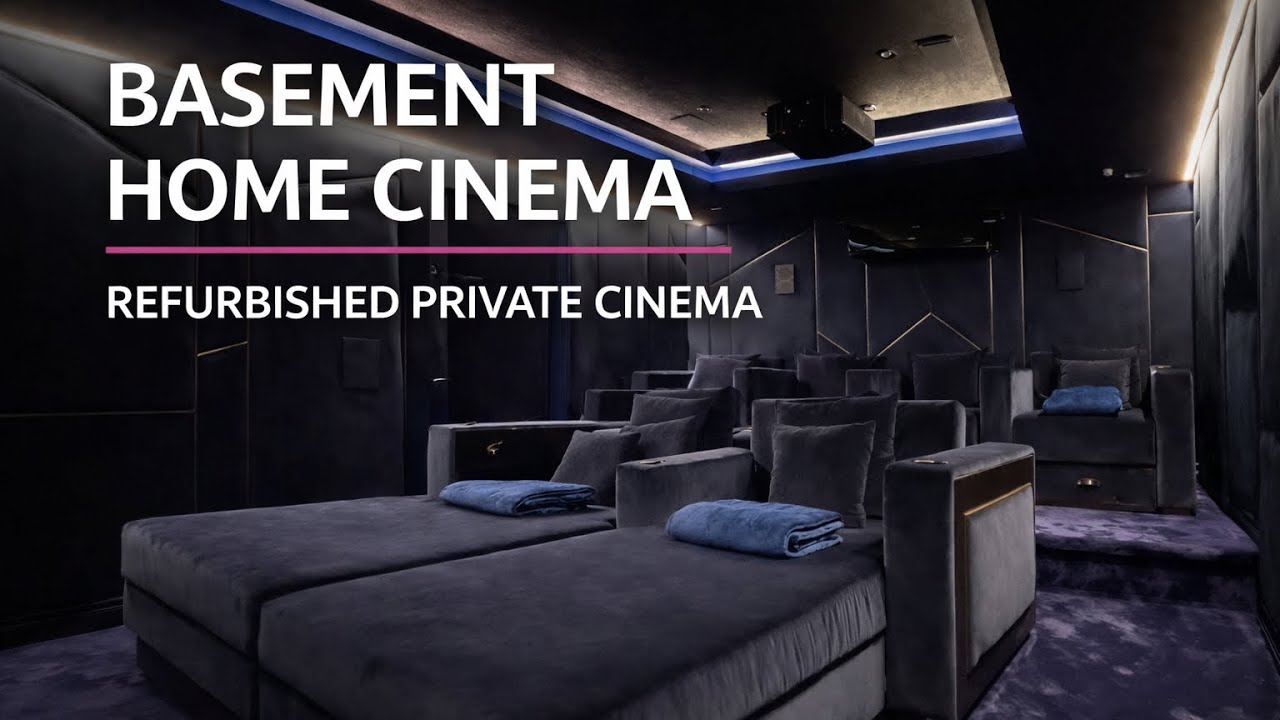
This Aldridge garage cinema runs a 7.2.4 Dolby Atmos system from M&K Sound, an Epson EH-TW9400 4K projector with a Screen Research acoustically transparent screen, and Control4 for the AV, lighting and climate. The whole project came to £50,000: £23,000 for the AV and control, and £27,000 for construction, installation and decoration. The video was filmed during commissioning, so this page also covers how the room was calibrated.
Virtus Integration installed the AV.
The speaker layout
All eleven speakers are M&K Sound in-wall and in-ceiling models, with the front three behind the acoustically transparent screen. Using one brand throughout keeps the sound consistent as it moves around the room.
| Position | Speakers |
|---|---|
| Front left, centre and right | 3 × M&K IW150, behind the screen |
| Surrounds and rear surrounds | 4 × M&K IW85 |
| Dolby Atmos height | 4 × M&K IW85 in the ceiling |
| Subwoofers | 2 × M&K X12, dual 12-inch THX models |
An Anthem MRX-1140 receiver drives the system. Sources are a PlayStation 5 and an Apple TV 4K.
Keeping the kit out of the room
Very little equipment is in the cinema itself. The projector is boxed and housed outside the main room, and the AV rack (a Middle Atlantic unit) sits in the plant room. In general, this keeps fan noise and heat away from the seats and leaves nothing on show apart from the screen.
Lighting and control
The room has two separate LED circuits: a high-level run and a low-level ring. Each can be on or off on its own and set to a range of colours, so the low-level ring can stay on as a soft light while the screen is in use.
Control4 (an EA3 controller with a Neeo remote) ties it together. Switches at the entrance work as master on and off for the whole system. Lighting moods sit on buttons as scenes, and those scenes can be changed later to suit how the owners actually use the room. The heating and cooling run through a Nest thermostat linked to the system.
Commissioning: calibrate, then calibrate again
The video catches the room part-way through set-up, with Kane from Virtus Integration explaining the method.
- 1.Each speaker's level was measured with a dB meter at a fixed distance, so that matching speakers produced similar levels.
- 2.Anthem's ARC Genesis room correction was then run.
- 3.The software's results were cross-checked against the manual readings.
Because the room had been designed from scratch, the readings were close to target, and the subwoofers' response came out especially well. The projector was also set up with calibration hardware. Both picture and sound were judged at about 95% of where they needed to be, because there were items in the room that would not be there in the end and the final seats were not yet in. Both were to be done again once the room was finished.
The lesson is that furniture and seating change how a room sounds, so a final calibration belongs after they arrive. More on this in our guide to home cinema audits and calibration.
What it cost
| Item | Cost |
|---|---|
| AV equipment and control | £23,000 |
| Construction, installation and decoration | £27,000 |
| Total | £50,000 |
These are UK prices for this project. More than half the budget went on turning the garage into a room before any AV arrived. For how that split changes with garage size and layout, see our garage cinema conversion cost guide. The video tour, filmed during commissioning, is in our £50K garage cinema walkthrough.
Frequently Asked Questions
How much did this garage cinema conversion cost?
£50,000 in total. That was £23,000 for AV equipment and Control4, and £27,000 for construction, installation and decoration. These are UK prices for this project. The building work was the larger share, which is common when a garage has to become an insulated, finished room first.
What does 7.2.4 mean in this room?
Seven ear-level speakers (three behind the screen and four surrounds), two subwoofers, and four height speakers in the ceiling for Dolby Atmos. All of them are M&K Sound models: IW150s at the front, IW85s for the surrounds and height, and two X12 subwoofers.
Why calibrate a home cinema twice?
Seating, furniture and anything else in the room change how sound behaves. In this room the first calibration was done before the final seats arrived and with items still in the room, so it was planned again once the room was finished. The same applied to the projector.
Where is the equipment kept?
Outside the cinema. The projector is boxed and housed outside the main room, and the AV rack is in the plant room. That keeps noise and heat away from the seats, and leaves only the screen, the seating and the lighting visible.